
Success courses and “Learning to learn” Workshops
For children experiencing difficulties during school holidays.
Workshops
Group classes for children experiencing difficulties throughout the year (outside school holidays).
Elementary school
Discover the details of the French and Mathematics curricula for each elementary school class, as well as the expectations at the end of each year in these subjects.
CP CLASS

In cycle 2, the cycle of fundamental learning, the CP class offers students 10h30 of French each week: it is the main subject studied in this class, along with mathematics (5h per week). The aim is to work on speaking, reading, writing and the French language.

During the first year of cycle 2, mathematics accounts for 5h of the lessons given in CP, each week, half as much as French (10h30). In this subject, the aim of this class is to know and understand numbers, be able to write them and calculate small quantities.
CE1 CLASS

The CE1 class is at the heart of cycle 2, after CP and before CE2. Following the 10 weekly hours of French (the main subject, along with the 5h of mathematics), the student must continue building on these fundamental skills to move into cycle 3, which focuses on deepening this knowledge…

As part of cycle 2, dedicated to fundamental learning (which also includes the CP and CE2 classes), a CE1 student has 5h of mathematics per week to develop their rigour, precision, and enjoyment of reasoning. As with French, this number of hours aims to prepare them for cycle 3, dedicated to deepening these foundations.
CE2 CLASS

The last class of cycle 2, dedicated to fundamental learning, CE2 gives pride of place to French, a subject to which it devotes 8h per week (mathematics accounts for 5h). Now more independent, the student speaks more in class and has a better grasp of the grammatical, spelling and vocabulary elements needed to deepen them in cycle 3.
The CE2 student devotes 5h per week to mathematics (compared with 8h for French). During this final class of cycle 2, they will acquire new automatic skills, strengthen their mental arithmetic and develop their enjoyment of inquiry and reasoning. They will build on this knowledge during cycle 3, dedicated to deepening their learning.
CM1 CLASS

For this first year of cycle 3, CM1 students work on French for 8h per week (and 5h of mathematics). A pivotal class, it involves developing new skills while building on the knowledge acquired in cycle 2.
As part of this first year of cours moyen (CM1), marking the start of cycle 3, mathematics is studied for 5h per week (the second most important subject after the 8h of French). While this class serves to deepen the teachings of cycle 2, it also introduces new techniques such as division…
CM2 CLASS

The last class before starting collège, CM2 devotes 8h per week to French (and 5h to mathematics), consolidating and deepening the fundamental learning of cycle 2. In this subject, one of the priorities of cycle 3 is writing texts…

In cycle 3, CM2 students spend 5h per week on mathematics lessons (8h on French). Building on the fundamental learning covered in cycle 2, they develop their capacity for abstraction, rigour and reasoning, which they can put to use in everyday life…
Middle school (collège)
Discover the details of the French, Mathematics, History-Geography, Modern Languages and Science & Technology curricula for each collège class, as well as the expectations at the end of each year in these subjects.
6E CLASS
Even though the 6e class still belongs to cycle 3 (along with CM1 and CM2), starting collège brings more hours devoted to science & technology and history-geography, not to mention modern languages, which have the same number of hours as mathematics, namely 4h per week. Of course, French lessons continue and take up 5 hours in the timetable of a 6e student…

Beyond the 5h of French taken each week, mathematics lessons take up 4h weekly (as do modern language lessons). Note that the other available hours in the 6e timetable are used to study, among other things, history-geography as well as science & technology.
During the last class of cycle 3 (and the first of collège!), 6e students will, alongside French, mathematics and modern languages, study history-geography for 3h each week (as with science & technology). During this time, they will study the ancient world and explore countries and continents around the world… They will also spend a little time on Civic Education.
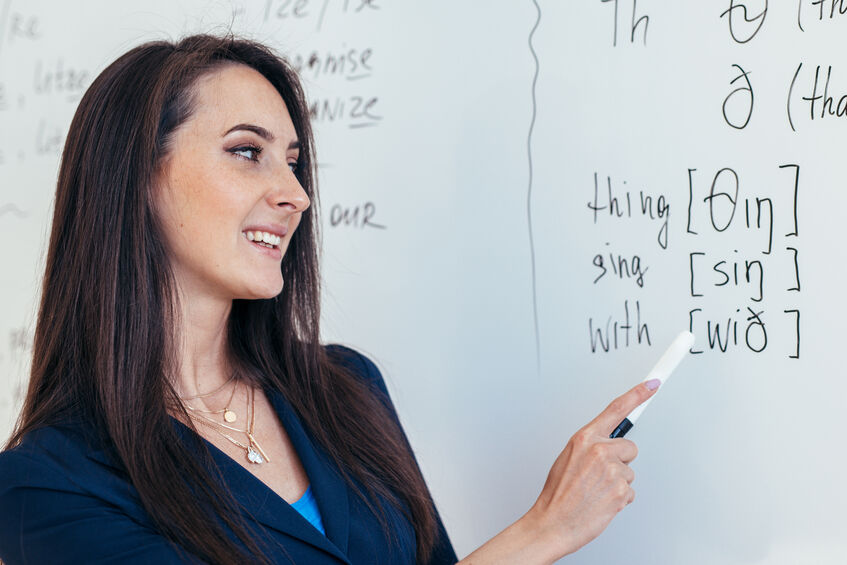
On entering collège, 6e students will study a modern language for around 4h per week. This is the same number of hours as mathematics, slightly less than French (5h), but more than history-geography (3h) and science & technology (3h). Traditionally, this first language is either German or English, but students are entirely free in their choice.

In the 6e class, science & technology lessons take up 3h of the weekly timetable, the same as history-geography. Note that mathematics and modern language lessons each take up 4h, and French 5h. Behind this subject are two distinct subjects: Life and Earth Sciences (SVT) and Technology.
5E CLASS

Now accustomed to new working methods and the collège environment, 5e students will be able to deepen their knowledge and acquire new skills: the teaching of major subjects is more balanced, with 4h30 of science & technology per week, 4h30 for French, 3h30 of mathematics, 3h of history-geography and 5h30 for the two modern languages.
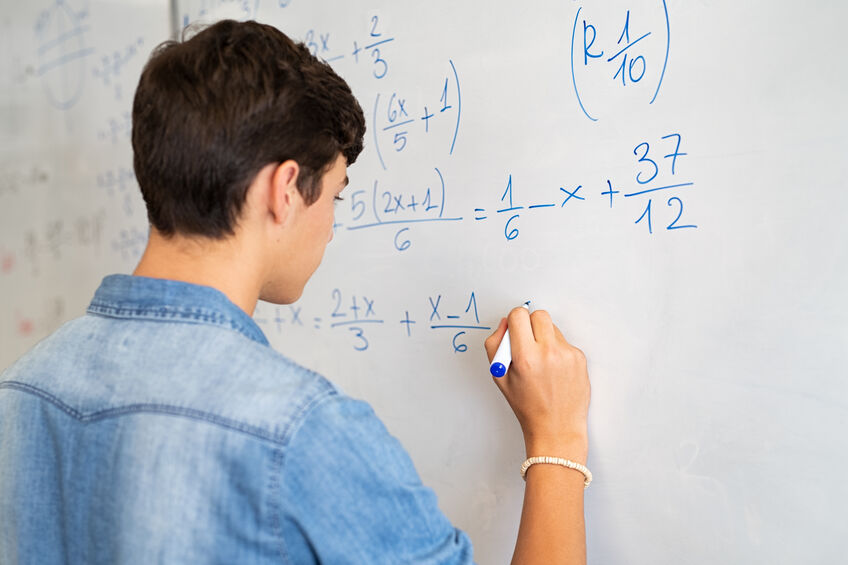
Mathematics lessons take up 3h30 of a 5e student’s timetable, while science & technology takes 4h30, French 4h30, 3h for history-geography and 5h30 for the two modern languages. Building on the teaching from 6e, the aim here is to refine inquiry and reasoning skills, in order to develop students’ independence in solving algebraic and geometric problems.

During the 5e class, history-geography takes up 3h of a student’s timetable, while mathematics takes 3h30, French and science & technology 4h30, and modern languages 5h30. Note that within this timetable, around thirty minutes are also devoted to Civic Education.
The 5e class marks the start of learning a second modern language, offering a total of 5h30 of lessons each week for teaching the two chosen languages. For reference, French takes up 4h30 of lessons, as does science & technology, mathematics takes 3h30 and history-geography 3h.

While French takes up 4h30 of the lessons given each week to a 5e student, science & technology takes up just as much — split between Life and Earth Sciences, Physical Sciences and Technology. Note that mathematics lessons last 3h30, history-geography 3h and modern languages 5h30.
4E CLASS

Just like science & technology, French takes up 4h30 of the timetable of a 4e student. Note that modern language lessons take 5h30, mathematics 3h30 and history-geography 3h. In the 4e class, the French teacher will build on the knowledge acquired in cycle 3 and use it to deepen the concepts covered in 5e.
In the 4e class, students devote 3h30 each week to mathematics: although the curriculum builds on that of 5e, it requires more independent thinking. Note that modern languages take up 5h30, French and science & technology 4h30, and history-geography 3h.
In the 4e class, although history-geography only takes up 3h of the timetable of students each week, it is particularly dense, in view of preparing them for the brevet exam. Note that studying modern languages takes up 5h30, French and science & technology 4h30, and mathematics 3h30.
Since the 5e class, studying the two modern languages has taken up 5h30 of a 4e student’s lessons each week, well ahead of French and science & technology (4h30), mathematics (3h30) and history-geography (3h). The aim is that by the end of cycle 4, they can master the first level of the CEFR (Common European Framework of Reference for Languages).
As with 5e students, science & technology takes up 4h30 of lessons each week, split into 3 distinct subjects — namely Life and Earth Sciences (SVT), Physical Sciences and Technology. Note that French takes up the same weekly number of hours, studying modern languages takes 5h30, history-geography 3h and mathematics 3h30.
3E CLASS

In the 3e class, French is taught for 4h each week. This is fewer hours than modern languages (5h30) and science & technology (4h), but more than mathematics and history-geography (3h30). As the final class of cycle 4, students will need to consolidate their knowledge — particularly to pass the brevet exam.

In 3e (as in the previous years of 5e and 4e), mathematics lessons are organised on the basis of 3h30 each week, the same number of hours as history-geography. This is fewer hours than French (4h), science & technology (4h30) and modern languages (5h30). In 3e, the mathematics curriculum consolidates the knowledge acquired throughout the collège years.

With the brevet exam approaching, history-geography lessons take up 3h30 of the timetable of 3e students (compared with 3h in previous collège years), at the expense of French, which now takes only 4h (instead of 4h30). The other subjects have had the same number of hours since 5e — namely, 5h30 for modern languages, 4h30 for science & technology and 3h30 for mathematics.
Since the 5e year, teaching the two modern languages has taken up 5h30 of collège students’ weekly timetable — regardless of the languages chosen (German, English, Spanish…). Note that science & technology takes up 4h30 of 3e students’ time each week, French 4h, history-geography 3h30 and mathematics 3h.
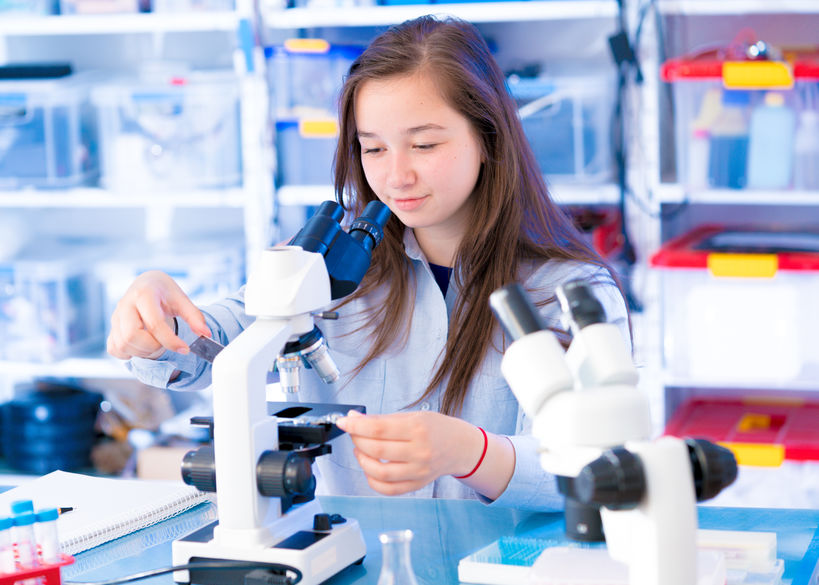
As with 5e and 4e, the 3e class includes 4h30 of science & technology lessons each week — comprising 1h30 of Life and Earth Sciences (SVT), 1h30 of Physical Sciences and 1h30 of Technology. This overall number of hours is fewer than modern languages (5h30), but more than French (4h), mathematics and history-geography (3h30).

