Despite the many games and toys filling their room, your autistic child systematically plays with the same object or endlessly repeats the same scenario. Left to their own devices, their free time lacks enrichment and variety. A pleasure for some, a puzzle for others, an autistic child’s free time deserves a bit of investment before it can become an enjoyable moment of discovery. How can you help your autistic child open up to new activities?
Why do autistic children struggle to manage their free time?
Because they don’t picture what they could do. “Do whatever you like” is an instruction your autistic child won’t understand. Because they find it hard to put into words what they want. Because they keep turning back to the same interests. More simply, because they experience the world differently. Hypersensitivity, dependence on routine, or a constant need to move are all barriers to new activities. If they try a new game, chances are they’ll use the unfamiliar toys in an unexpected way. You’ll also have noticed their difficulty playing imaginative or pretend games. All these factors combined lead to a reluctance to start a game, a sport, or a craft activity during free time. Add a social dimension with other children present, and the activity can quickly become a source of stress for them. But you’re here, looking for advice and good ideas to support them, so anything is possible.
Why is a variety of activities essential for autistic children?
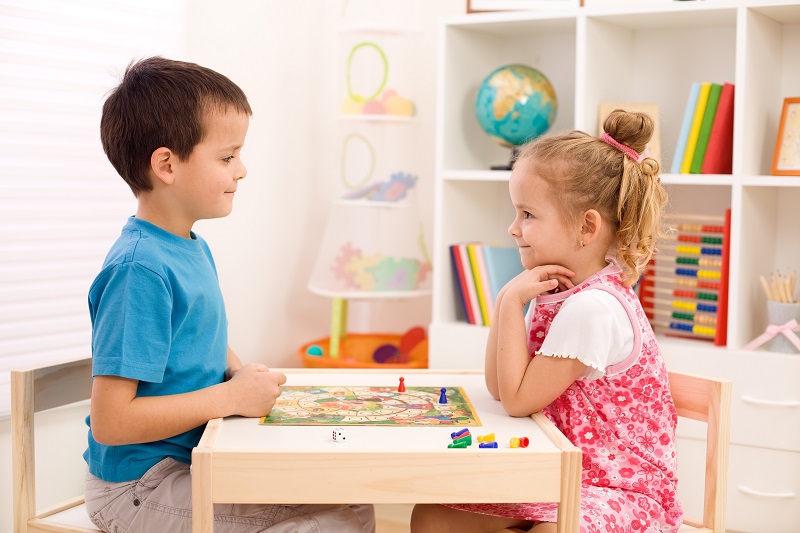
Play is an excellent way to engage with one’s surroundings. By taking part in an extracurricular activity, joining in a board game, or joining a group at the park, an autistic child can interact with people outside the family circle, in a reassuring, structured setting that helps them fit in.
Trying new activities during free time also lets them broaden their range of skills through new experiences: building, moulding, cooking, painting… these are among the best forms of learning.
Playtime involves complex activities that call on demanding processes for autistic children: language, communication, social understanding, and imagination. Playing with someone else means sharing and building a connection together, an exchange that allows them to express their creativity and personality. Taking part in a game together means being active and taking the other person into account. In other words, it’s also a way of learning how they work.
How can you introduce your child to new games?
First, it helps to distinguish between three types of activities, so you can alternate and adapt based on your child’s preferences and the context.
Family activities, for which you already have plenty of resources, since you know your child’s interests, and which keep them in a familiar, reassuring atmosphere.
Extracurricular activities, linked to their favourite play themes or skills, which could point you towards a sport, arts and crafts, a musical instrument, or a board game…
Solo activities. This last category also requires some preparation time to give it every chance of success.
Many websites dedicated to autism actually recommend preparing a small reference list in advance, noting:
– their favourite toys and games
– their recurring activities when alone
– what bothers them most (smells, noises, situations…)
This is a very useful idea, because this small notebook lets you steer their specific interests towards a new way of approaching them. It will also be an excellent support to guide your child step by step as they take up a new activity. You could, for example, note down new games and simplified instructions in it. They can later draw on it for ideas to fill their free time independently.
It can also be useful to note their difficulties, or the maximum play time not to exceed. That way, whether at home or with friends, the little notebook can also help those around your child suggest a game they’re used to playing, and above all, played by their own rules. As for rules, it’s best to anticipate and familiarise them with this constraint to make future interactions easier. Here is a “good player” chart to help them understand the value of rules in an activity.
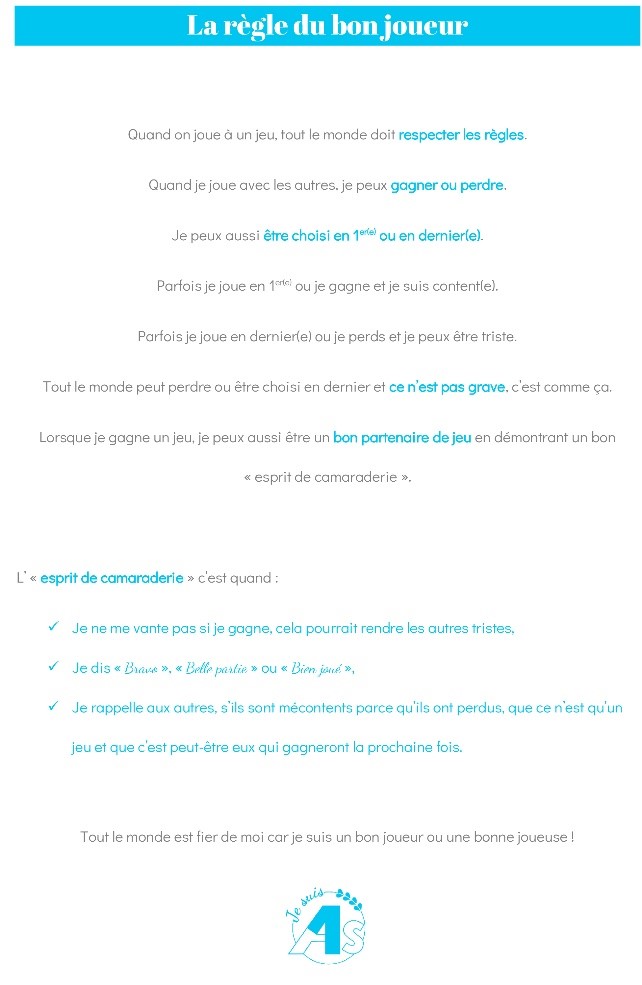
Source: https://www.jesuis1as.com/
Short on inspiration? Here are a few games everyone agrees on.
Outdoors: gardening, observing nature, walks, collecting leaves, shells or stones, playing in the sand, water play…
At the park: slide, swing, climbing, cycling, scooter…
Board games: for younger children, games with a surprise element such as Scaredy Fish, Jenga, Pop-Up Pirate, Miss Kipik… For older children, games that put their brains to the test such as Dixit, chess, Careers, Cluedo Junior, Uno, Dobble, Lynx, Battleship, Mastermind, Guess Who, with a special mention for Genius Square, which can be played solo or with two players, and Connect 4…
Hands-on and sensory activities: modelling clay, salt dough, finger or tool painting, stickers, beads, colouring, bubble games, sound or scent-based games…
In the kitchen: with simplified, illustrated recipe cards and a tasty result, cooking with your child can become their new passion!
Reading: alone or with someone reading along, books are ideal for escaping into another world and help lengthen autistic children’s attention span.
Tablet games: although not recommended in general for children, moderate screen use has proven effective for teaching autistic children a wide range of skills.
Be patient. Filling their free time with a new activity will take a lot of effort from your child. One piece of advice: don’t hold back on encouragement! Supporting them in learning new activities doesn’t mean forbidding them from spending time on their routines and favourite activities. It’s about gently opening them up to a new form of play while building their future independence. To support you in helping your child thrive without logistical constraints, ORA’s team of speech and language therapists, child psychologists and video tutors, specialised in autism spectrum disorders, remains available online for remote consultations.