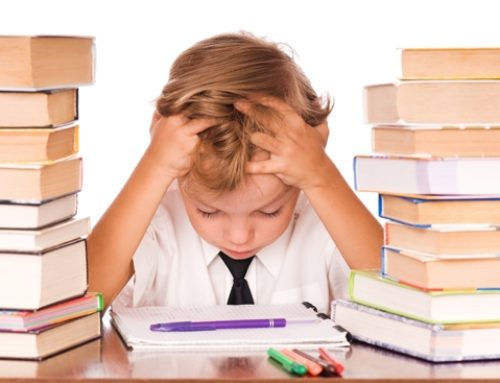
Stress is a normal part of everyday life. In small doses, it can be stimulating and a source of drive and creativity. But repeated or in larger doses, it can harm your physical, mental, and intellectual health. More vulnerable than an adult, a child can develop learning difficulties, even blocks…
What are the sources of stress for a child?
Stress is not necessarily an easy feeling to spot in children – most struggle to put their anxiety and distress into words. Parents therefore need to watch for unusual behaviour, such as trouble going to bed, recurring nightmares, frequent tantrums, and so on.
Beyond these warning signs, here are the factors identified by Thomas Holmes and Richard Rahe in their childhood stress scale (from most to least significant): the death of a loved one, a divorce, a growing family, parents arguing, starting school, and changes in routine or caregivers (a new nanny, a parent’s absence, moving house…).
But everyday stress is certainly the most damaging – seemingly harmless remarks a parent might make without realising the impact. For example, the phrase “if you carry on, we’ll leave you here and go without you” is extremely anxiety-inducing for a child, for whom their parents are everything. It can feed a sense of abandonment, which can trigger nightmares. Along the same lines, repeated threats, a relentless pace where they constantly have to hurry, and pressure from their environment to be more like this, less like that, all play a part.
How can stress lead to learning difficulties?
During the first years of life, the human brain is still developing: a fragile state that makes children more vulnerable to stress. Out of a lack of awareness, parents can leave them to face emotions that are hard to manage, flooding the brain with stress hormones (adrenaline, noradrenaline, and cortisol).
Several studies in neuroscience have shown that stress affects neurons, slowing their growth or even destroying them. It also damages myelin, the substance that surrounds neurons and speeds up electrical impulses. It inhibits neuroplasticity, the brain’s ability to reorganise itself by breaking connections or, conversely, forming new ones between neurons. The hippocampus too – the brain’s memory centre – is highly sensitive to stress, which affects attention, concentration, and memorisation.
Not to mention DYS disorders (dyslexia, dysphasia, dyspraxia…) or ADD (Attention Deficit Disorder), it’s essential to support your children and surround them with as calm an atmosphere as possible. Since nobody can be perfect on this front, it’s sometimes worth referring them to a psychologist, so they can express their emotions and feelings with professional help. On the Ora-Visio platform, you can find a professional for a remote consultation: why not give it a try?