Parental burnout affects parents of children with NDD in particular. Discover the causes, the warning signs, real testimonials and solutions for regaining your energy.
Being the parent of a child with NDD (Neurodevelopmental Disorder) means loving deeply… but it also means carrying an emotional, organisational and mental load well beyond the “norm”. While any parent can be affected by burnout, research shows that parents of children with neurodevelopmental disorders are more exposed, because of the specific daily challenges they have to face. Parental burnout is not a sign of weakness: it is a warning sign of a burden that has become unsustainable.
When the parental role outstrips the energy available
Parental burnout occurs when a parent becomes emotionally and physically exhausted, feels distanced from their child despite themselves, and is overwhelmed by the feeling of no longer being up to the task. They feel guilty for not understanding their child.
With a child who has an NDD, the risk increases, because everyday life is often:
- More unpredictable: meltdowns, sensory overstimulation, rigidity, defiance, impulsivity…
- More demanding: anticipating, moderating, adapting, reassuring, explaining, repeating.
- More administrative: assessments, follow-ups, medical appointments, MDPH paperwork, school accommodations.
- More isolating: lack of understanding from those around them, judgement, unhelpful advice.
- More guilt-inducing: the feeling of “doing too much or not enough”, family conflict, self-doubt, emotional fatigue.
This accumulation drains their resources.
The signs of parental burnout in parents of children with NDD
They can be the same as for any parent, but they often take on a particular shape:
Deep exhaustion
Not just tiredness: nervous exhaustion, linked to sensory stimuli, repeated meltdowns, and the need for constant vigilance.
Emotional distancing as self-protection
The parent “shuts down” to hold on, switches to autopilot, or dreads interactions because they are often a source of tension. “That can explain some children’s packed schedules. We make sure they have plenty of activities outside the home.”Sébastien Henrard, Clinical psychologist specialising in neuropsychology
Amplified guilt
“I can’t manage to be patient anymore”, “I can’t cope the way others do”, “I have no energy left”, “I should accept more, understand better…”
Hyper-responsibility
The parent becomes the pivot for everything: regulating the child’s emotions, liaising with the school, coordinating care, adapting the environment…
A sense of isolation and being misunderstood
Others downplay it (“He’s just a bit boisterous”), give unsuitable advice, or judge (“You need to be firmer”, “You need to let go”).
Why are parents of children with NDD more vulnerable?
Studies show that parents of children with ADHD or ASD experience significantly higher levels of parental stress than other parents, notably because:
- Managing oppositional situations can be extremely draining: he doesn’t want to do his homework, won’t put down his game to have a shower… All the more so as this repeats every day, sometimes several times a day.
- Society places a lot of responsibility on parents, without offering enough support. “You’re not strict enough with your child!”, “In my day, that wouldn’t have happened!”
- Administrative and therapeutic tasks are time-consuming: on top of taking the children to their extracurricular activities, there are appointments with the speech therapist, the occupational therapist… The next ESS meeting has to be scheduled for drawing up the GevaSco, the MDPH file has to be filled in to request school accommodations. There are also meetings at school because the teacher keeps asking to see the parent.
- Lack of respite is common, especially as siblings often include several neuroatypical children. Not only does the neuroatypical child often have several associated disorders known as comorbidities – for example one or several DYS disorders alongside ADHD – but their brothers and sisters are very often neuroatypical too. We now know that NDDs have a genetic component. Which means, inevitably, that the parent may well be neuroatypical too!!
Burnout therefore occurs when a parent gives a great deal without any real chance to recover.
Testimonials:
“I adore my son. But I feel like I’m on high alert 24/7. When he has a meltdown, it’s like my body just empties out. I have nothing left.” Parent of a child with ASD
“I don’t dare take him out anymore. The slightest stimulation can trigger a meltdown. I feel guilty for being afraid of it.” Parent of a hypersensitive child with ADHD
“Between the appointments, the paperwork, school… I don’t have a single minute to breathe anymore. I’ve become his life coordinator more than his mum.” Parent of a child with dyspraxia and dysgraphia
“When I switch to autopilot, I feel ashamed. But it’s my only way of not falling apart.” Parent of a child with an intellectual disability
How to prevent and ease parental burnout when a child has an NDD?
Moving away from “carrying it all alone”
No parent can be therapist, special-needs educator, coordinator and parent all at once. Identify what can be delegated:
- allied health sessions,
- educational interventions,
- school mediation,
- support from associations or family members.
Finding a space to talk
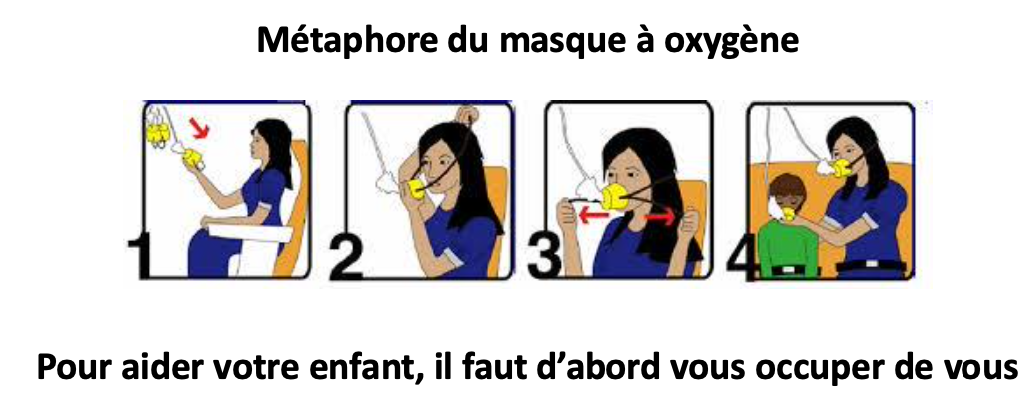
A psychologist specialising in NDD, support groups, parent associations… Starting a PEHP, a Parental Skills Training Programme. Hearing “it’s normal to be exhausted” changes everything!!
Lightening the daily load
- Simplify routines
- Reduce school and family demands when necessary
- Use visual tools (pictograms, routines, timers) to ease tension
Protecting your emotional energy
Even 10 minutes of genuine respite can reset the nervous system.
Taking breaks is not a luxury: it is a matter of parental survival.
Rethinking how roles are shared
Many mothers (often over-invested) wear themselves out because they carry 80% of the appointments, paperwork and emotional regulation.
Rebalancing this is essential.
Accepting that the “good parent” isn’t the one who does everything… but the one who holds on for the long run!!
Conclusion: Recognising parental burnout means honouring the load they carry and validating their exhaustion.
Supporting these parents is not a luxury, it is a necessity.