While DYS disorders affect one or more specific areas of learning (reading, writing, arithmetic, spelling), they are almost systematically accompanied by psychological distress. Children with DYS suffer from anxiety and fatigue, which gradually erode their self-image and draw them into a damaging downward spiral. Fortunately, there are ways to help them.
A negative view of their learning abilities
Not innate, fundamental skills, reading, arithmetic, writing, spelling, are acquired through teaching methods that form the main goals of the early school years. Developmental in nature, learning disorders (DYS disorders) create difficulties that affect the acquisition of these skills:
- Written language: dyslexia and dysorthographia
- Arithmetic skills and numeracy: dyscalculia
- The planning and pre-programming of complex gestures: dyspraxia and dysgraphia.
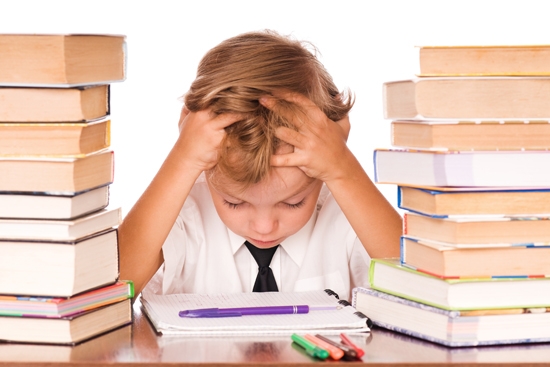
But whatever the nature of the disorder, children with DYS suffer from psychological distress, from anxiety and fatigue: repeated failures build a negative view of their abilities in the affected area of learning.
The downward spiral of children with DYS
Starting from this assumption of incompetence, or at the very least a feeling of inferiority compared to others, children and teenagers with DYS will then want to avoid the learning activity in question. A protective reflex to guard against failure, but also against criticism and possible mockery from classmates. Naturally, this voluntary withdrawal significantly affects their chances of improving in that area of learning…
Once caught in this downward spiral, children with DYS withdraw into themselves, which affects both their social relationships and their self-image. Indeed, did you know that self-image is built, on one hand, from the perceived gap between one’s abilities and one’s ideals, and on the other hand, from how one perceives peers’ views of one’s own abilities?
The role of psychological support
First of all, know that there are many books on self-confidence in children that can guide you on the best way to support your child with DYS, books aimed at both children and parents.
Then, by staying attentive to and listening for the emotions shown by your child, you’ll be better able to identify their underlying needs and offer an appropriate response: is it sadness, anger, a sense of injustice, a need to be understood, to be reassured, and so on?
Of course, you can also ask for the help of a professional on the Ora-Visio platform: specialised in learning disorders, they can hold space for your child’s distress and help them face it. But you can also consult a psychologist for yourself, as a parent, to help you understand the situation and find your own footing in relation to your child, so you can offer them real psychological support day to day.
Good to know: while a single consultation is rarely enough to change the situation, that doesn’t mean you need to commit to long-term therapy to see results.