“We don’t understand why he doesn’t understand.”
“We can’t tell if it’s because he doesn’t want to… or because he can’t.”
“The teacher talks to us about doing assessments for DYS disorders, but we don’t know which one.”
“I read about ADHD and it made me think of my son.”
“He’s sometimes like his cousin who has ASD… but not exactly.”
Many parents say these words when questions start to emerge. When a child seems to function a little differently from others, when learning at school runs into an invisible wall, when certain reactions seem hard to understand… it is natural to look for answers.
A path that can be difficult to make sense of
For some families, these questions mark the start of a journey that is often long and sometimes confusing: waiting for an appointment, going through assessments, waiting for results, getting a diagnosis, waiting for support, looking for the right professionals… and sometimes starting over.
It is also an entry into a new world: new professionals (speech therapist, psychomotor therapist, neuropsychologist, occupational therapist, child psychiatrist, paediatric neurologist…), new words, new acronyms. ASD, ADHD, ID, PPS, PAI, ESS… Parents often have to get to grips with a whole new vocabulary while they are still trying to understand their child.
This is sometimes called diagnostic wandering. Many parents feel like they are being passed from one professional to another before finally getting a clearer picture. This takes money, energy and, above all, precious time, during which the child keeps growing with their own way of functioning, in an environment that isn’t always suited to their needs.
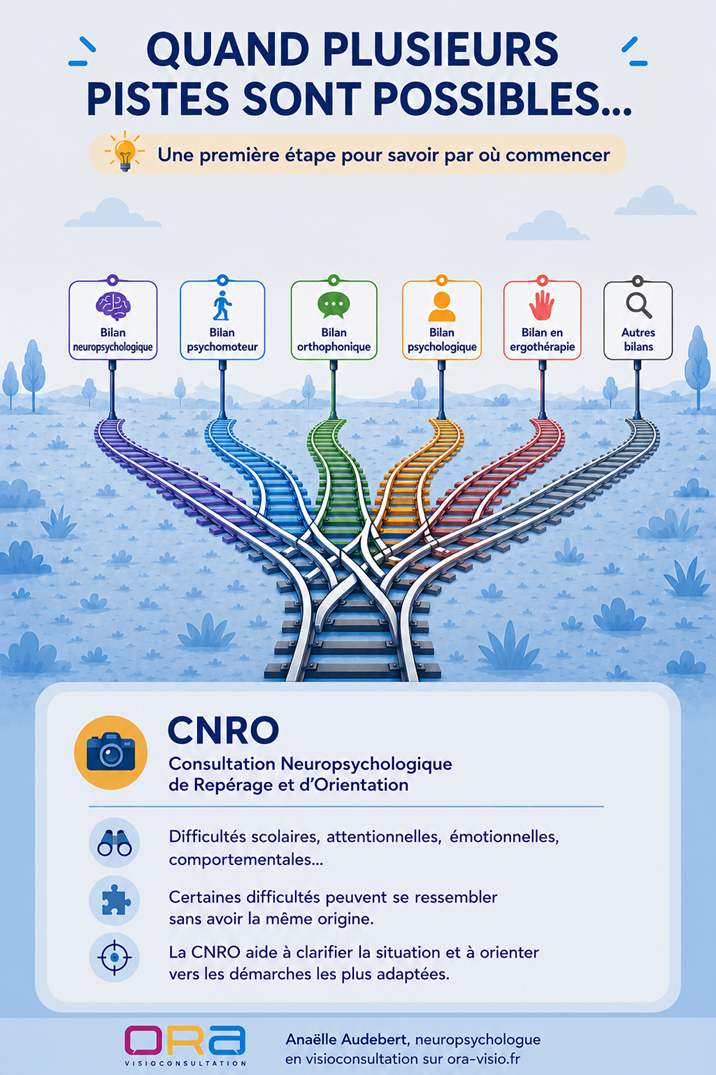
It is precisely to help families see things more clearly that the Neuropsychological Screening and Referral Consultation (CNRO) exists.
What is a CNRO?
The CNRO is an in-depth interview lasting around 2 hours with the parent(s), led by a neuropsychologist.
Its purpose is to review the child’s situation in order to determine whether the concerns raised genuinely call for further assessments, and if so, which ones seem most relevant at this stage.
In practice, this interview goes back over the child’s developmental, school and family history: perinatal history, medical background, language, motor skills, sensory processing, eating, sleep, toilet training, emotions, social relationships, daily life, school context…
This consultation does not replace a neuropsychological assessment or a diagnosis. The child is not present and no standardised tests are carried out. It is, above all, a step to clarify the situation, identify concerns and point the family in the right direction.
What this consultation can offer
At the end of the interview, parents leave with a clearer picture of the situation and concrete pointers on:
- which difficulties seem to be the priority to explore;
- which assessments seem the most relevant;
- which professionals or organisations to approach first;
- which first steps can be put in place day to day.
Why see a neuropsychologist?
The neuropsychologist has an in-depth understanding of neurodevelopmental disorders, as well as other difficulties that can sometimes look similar.
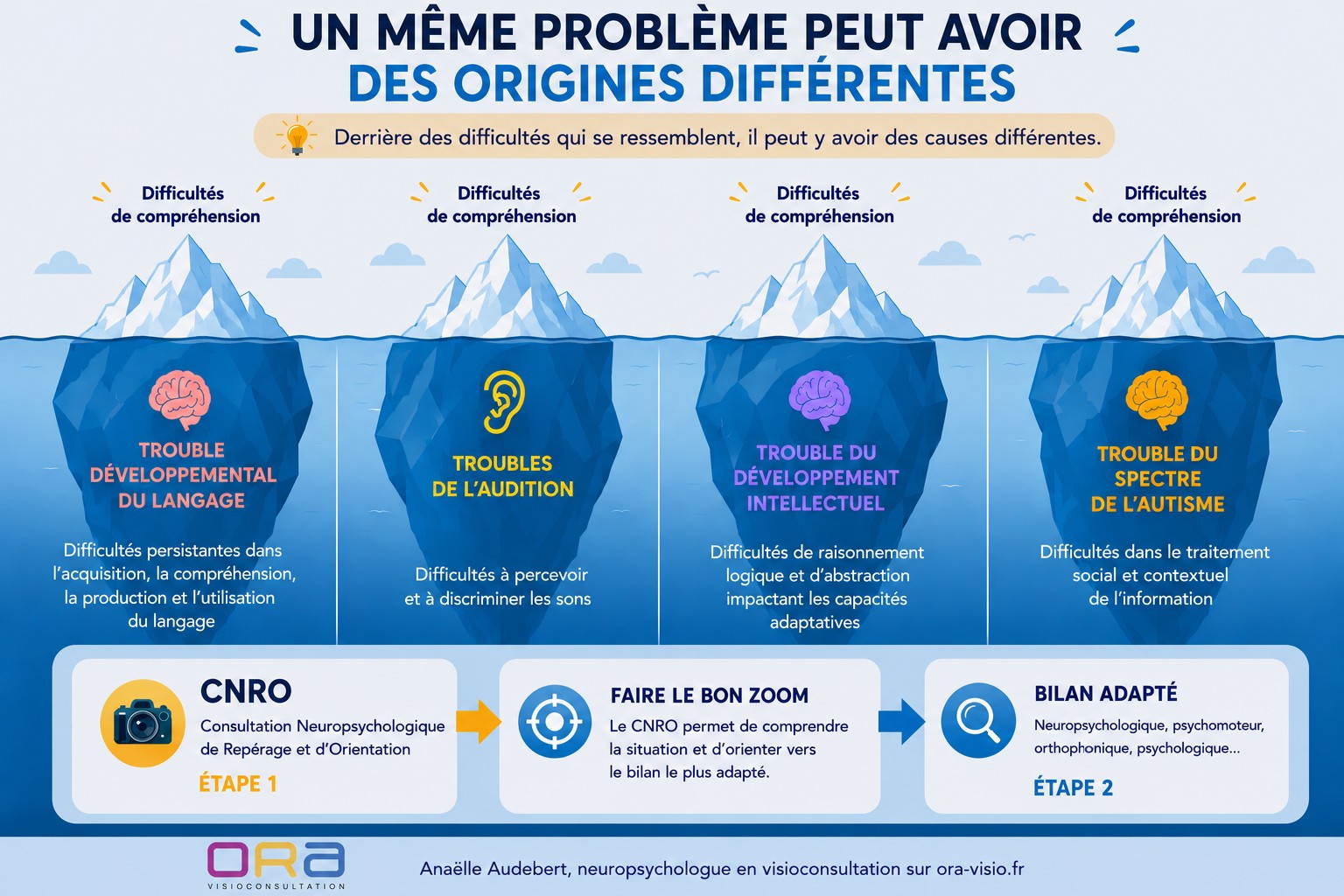
Because behind manifestations that can look alike on the surface — inattention, restlessness, difficulties at school, social withdrawal, fatigability — the underlying causes can be very different. Sleep disorders, hearing or visual impairments, epilepsy, emotional disorders, neurological conditions, genetic syndromes… the difficulty doesn’t always come from where you might expect.
You could say that the visible tip of the iceberg can sometimes look similar, even though what is happening beneath the surface is different.
The value of this first step is therefore to sharpen the clinical picture, prioritise what matters most, and better guide the rest of the journey.
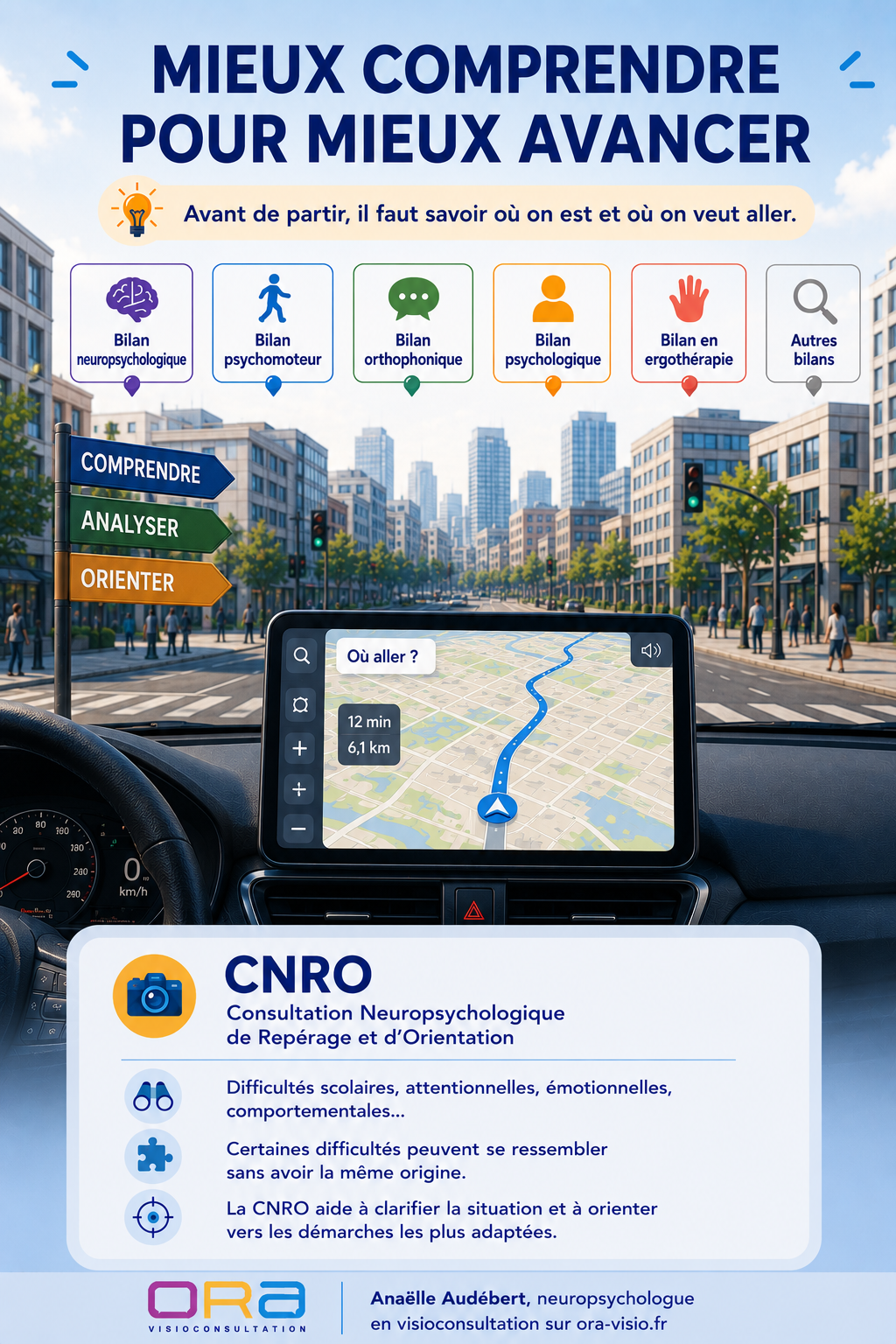
Understanding better to move forward better
When questions start piling up, it isn’t always easy to know where to begin.
The CNRO offers a first checkpoint, a chance to step back and bring some order to what is raising questions, causing worry, or remaining hard to understand day to day.
It helps identify what is worth exploring further, understand certain aspects of how the child functions, and provide some reassuring answers.
It is a time for listening, reflection and guidance, so that parents can move forward with clearer pointers and don’t have to face their questions alone.