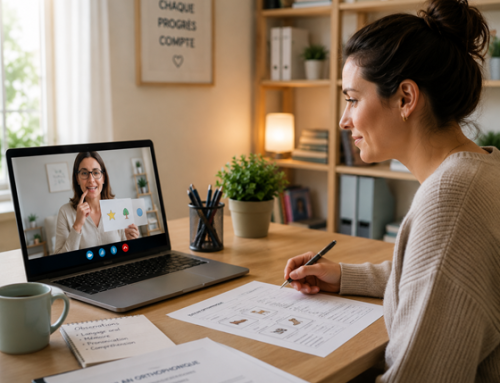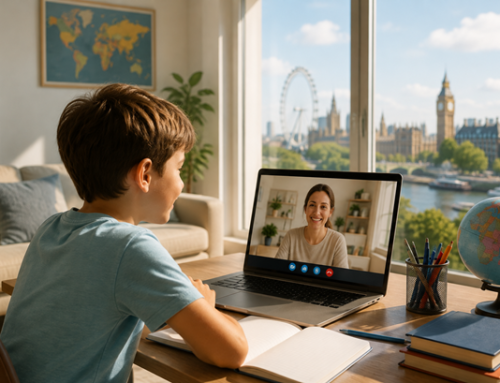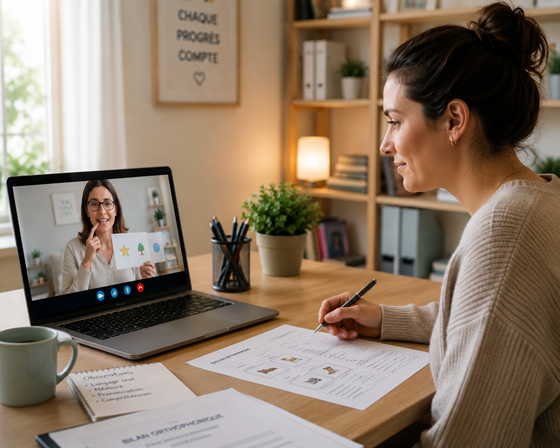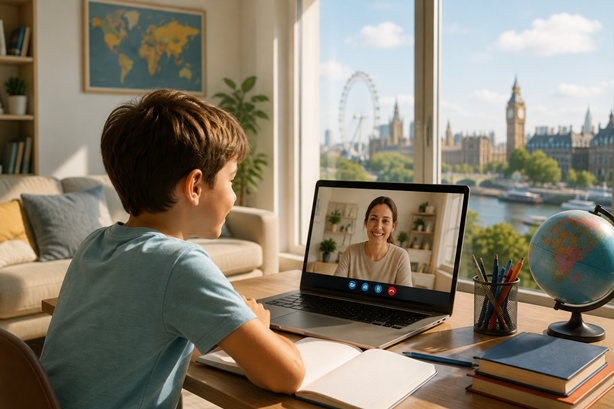
Highly recommended for the remediation of learning disorders (DYS disorders), the speech and language therapist is a professional who can help at any age: with babies, in cases of delayed oral language development, with schoolchildren, from the very first difficulties, and with secondary school and sixth-form students, to consolidate the coping strategies developed previously. Since in-person consultations and remote speech therapy have the same effects, feel free to choose remote sessions, which will always be easier to fit into your schedule…
Delayed oral language development in babies
The language milestones defining what a baby should achieve at 1, 2, 3, 4, then 5 years old serve as benchmarks for detecting possible language delays. While every child develops oral language at their own pace, it’s recommended to consult a speech therapist if certain milestones are significantly delayed. For example, if a one-year-old baby doesn’t produce many sounds, or if a two-year-old doesn’t imitate animal or car noises…
Depending on the situation and needs, remote speech therapy sessions can become parent guidance sessions, if the child cannot sit still and concentrate for long. If they can, the professional can carry out fun exercises with them and then share these, so you can continue them at home.
Managing learning disorders between ages 6 and 11
Traditionally, remote speech therapy sessions for school-age children are used to compensate for difficulties linked to the emergence of learning disorders: dyslexia, dysorthographia, dysphasia, dyscalculia, or Attention Deficit Disorder, with or without Hyperactivity.
A speech and language assessment sets the goals and frequency of sessions. For example, for a child with dyscalculia, this may involve developing logical structures such as classification and seriation. Using remote speech therapy between ages 6 and 11 often requires an adult to be present, especially at the start, to familiarise the child with the computer tool.
Note that, depending on needs and circumstances, it’s possible to call on other DYS specialists: on the Ora-Visio platform, you can contact occupational therapists, psychologists, graphotherapists, and more.
Remote speech therapy for secondary school and sixth-form students with DYS
Traditionally, remote speech therapy for secondary school and sixth-form students continues the work started during primary school. Failing that, it steps in to diagnose the DYS disorder(s) in the teenager and help them develop strategies to compensate for their difficulties. Here again, a speech and language assessment is required to set goals and define the right pace, even though sessions are generally weekly.
Note that teenagers are generally very comfortable with computer tools and can follow remote speech therapy sessions completely independently.
Seeking an online speech therapist can of course also happen in adulthood, even though the person has usually learned—alone or with support—to work around their learning disorders.