A lifelong condition, dyspraxia is a disorder affecting motor skills and the coordination of movement. This can show up as difficulty waving goodbye or brushing one’s teeth. When the child is young, it’s not uncommon for this disorder to be mistaken for natural clumsiness. But at school, dyspraxic pupils quickly and consistently fall behind in their learning, due to the poor execution of simple movements. Fortunately, there are tips to make everyday life easier for them, particularly at school.
Tip 1: Pencil grips for writing
Due to a clear lack of dexterity, a dyspraxic child may experience gripping difficulties, particularly with pens and pencils. To stop objects slipping or wobbling, you can choose a grip and/or a finger guide. For example, with a triangular finger guide, suitable for both right- and left-handed children, all the child needs to do is place their fingers on each side of the triangle.
Tip 2: Ergonomic tools for dyspraxic children
To support dyspraxic children with geometry activities, don’t hesitate to equip them with tools adapted to their condition: such as easy-grip scissors, Bullseye compasses (held with one finger at the centre of the circle), a set square with a handle, a non-slip ruler, a magnifying ruler, and so on. All of these are ergonomic school supplies designed to help offset their difficulty integrating the spatial component of their movements.
Tip 3: An adapted workspace
Set up in consultation with their teacher, adapting their workspace should help ease their efforts. It’s worth remembering that movement difficulties get worse with tiredness. Here, the aim is to think about their posture, with a correct seating position and overall stability. To boost their ability to concentrate, it’s possible to enclose their workspace with a visual barrier, removing any “distracting” sources of stimuli.
Tip 4: “Where’s Wally” for visual scanning
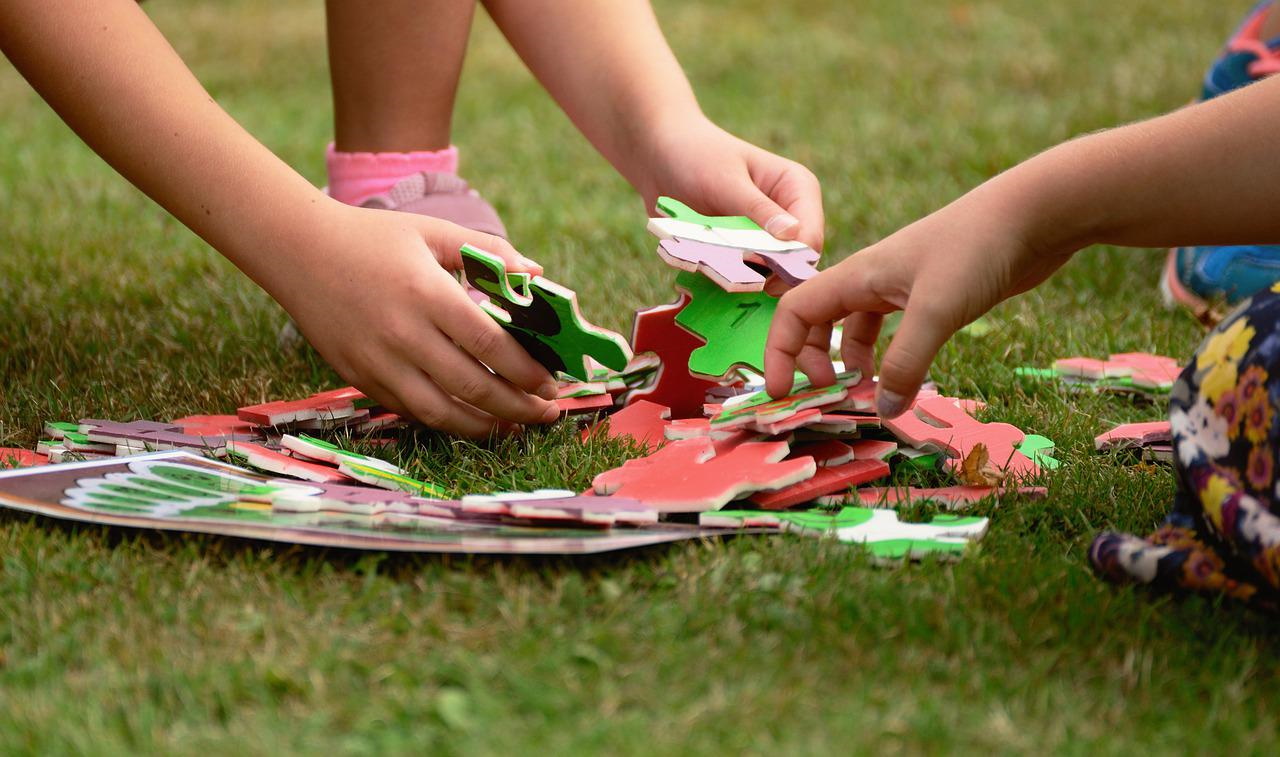
Dyspraxic children typically experience difficulties with visualisation and memorisation, yet these skills are essential for writing. On this point, you can help your child’s visual scanning with the “Where’s Wally?” game. You can also work on it with puzzles and construction games, particularly versions with magnetic pieces.
Tip 5: Templates adapted for dyspraxia
At school, you can suggest your child use lines in 4 different colours to help them find their way around when writing: the letter plants its feet on the ground (shown in brown), and reaches up to the grass (green); tall letters reach up to the sky (blue), while others cross the ground down to the fire (red). For maths, you can rely on a table with coloured columns, so that numbers line up neatly one below the other…