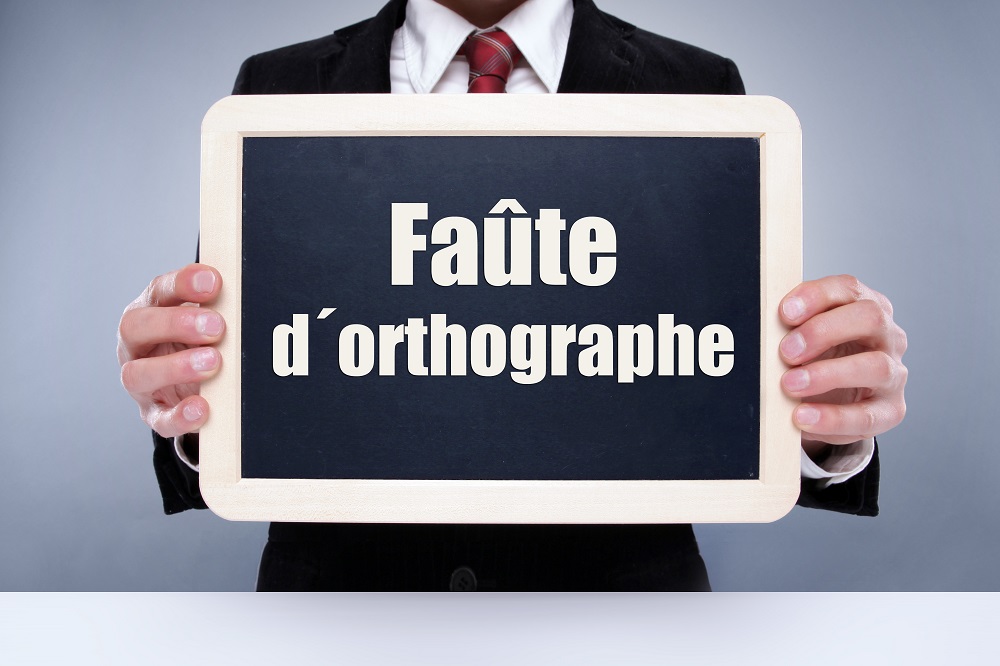
It’s written in black and white, though. The label reads “Soap for the path.” Skeptical? No, you have dysorthographia. It actually says “Soap for the bath.” This is what 80% of children with a DYS disorder would read. What is dysorthographia? How can you spot the symptoms? How can you help a child with dysorthographia?
Defining dysorthographia
Dysorthographia is a persistent learning disorder characterised by difficulty learning and applying the spelling of words. This cognitive impairment shows up as an inability to copy a text accurately, apply agreement in gender and number, build correct sentences, or conjugate verbs correctly.
The different causes of dysorthographia
It can have a neurological and hereditary origin. It is also encouraged by medical factors (prematurity), psychological, genetic (issues with the brain’s systems), hormonal, or environmental factors (a disadvantaged background). Affected children have weaker linguistic and phonological skills and suffer from a visuo-temporal dysfunction. In concrete terms, they struggle to process fast, jerky, and contrasted information.
What are the symptoms of a child with dysorthographia?
Spotting the signs of the disorder
While it cannot be prevented, dysorthographia can be detected early, which makes treatment far more effective. From the very first stages of learning to read and write, certain signs can raise the alarm, particularly during the approach to letters and spelling in primary and secondary school:
- Choosing the wrong letter or group of letters to represent a sound.
- Confusing certain letters, such as “F and V”, “P and B”, “T and D”.
- Adding, moving, or leaving out a letter in a word, such as writing “boook” for “book” or “scholl” for “school”.
- Wrongly joining several words together or splitting them apart, such as writing “alot” for “a lot” or “cant” for “can’t”.
- Not following spelling rules.
- Confusing homophones, such as “their” and “there”.
- Forgetting spelling-correction strategies, such as replacing a verb with a simpler one to check whether it should be spelled a certain way.
- Having difficulty taking notes and rereading them.
Making a diagnosis
Only a full speech therapy assessment can diagnose dysorthographia. During this assessment, the speech therapist tests intellectual potential, memory and attention to evaluate the severity of the disorder. This ensures the child does not have an intellectual disability, attention disorders, comprehension difficulties, or motor problems.
By running these tests, the speech therapist has everything needed to detect other disorders, such as dyslexia , which is often associated with dysorthographia, as well as dyscalculia or dysexecutive syndrome. A neuropsychological assessment may also be recommended to properly pinpoint the child’s difficulties and design the most suitable treatment plan. Indeed, the rehabilitation strategy is tailored to each child with dysorthographia and also helps determine the right school accommodations (extra time for writing, permission to use spelling reference sheets, etc.).
Helping my child with dysorthographia
Treating the disorder
Yes, the disorder will last a lifetime, but rehabilitation is essential to the child’s development. It will help them understand their impairment and face their difficulties in order to work around them and thrive in a balanced way. Once dysorthographia has been diagnosed, individual speech therapy follow-up is prescribed. Speech therapy sessions cover learning letters and sounds, spelling rules, and visualising and memorising the spelling of words. To achieve this, mnemonic and visual tools are offered to the child. Sessions with an occupational therapist are also often prescribed to round out the rehabilitation programme. Sometimes this follow-up is disrupted by a lack of practitioners near the child’s home. Some towns and regions are genuine medical deserts, with waiting lists for a speech therapy appointment stretching over months. Families living abroad are also affected by the lack of speech therapists available near home. Rehabilitation often calls for several sessions a week, a pace that can be hard to keep up for families with busy schedules. To address all these situations, the ORA platform has brought together qualified speech therapists specialised in dysorthographia and other DYS disorders. It offers online consultations. Just as effective as in-person sessions but accessible anywhere in the world, these online speech therapy sessions allow for rigorous, low-hassle rehabilitation.
Everyday support
Do parents have a role to play in this speech therapy follow-up? Absolutely. At home too, they can take part in their dysorthographic child’s rehabilitation. It all starts with reading. Give them a taste for reading by choosing subjects that excite them. Beyond great games like hangman or Scrabble, they can read and then cook a recipe, read about and try out a science experiment, take up karaoke… Reading can be done alone or shared with a parent, identifying difficult words together so they become associated with this enjoyable moment. What matters is that the child is exposed to this learning as much as possible without it becoming a chore. They’re already putting in far more effort than other children.
“They often work harder than others to achieve a poor result. This child feels inferior, even stupid, and takes even the smallest remarks hard. They feel attacked and unrecognised when they read the comment ‘lesson not learned‘ after spending two hours on it. Giving them extra work to help them catch up is pointless. It’s much wiser to give them less!”
Sylvie Mével, speech therapist
Self-esteem and professional success with dysorthographia
Working on self-confidence
Because living with dysorthographia takes a toll on self-esteem, special attention must be paid to rebuilding a positive self-image for this child. At school or in everyday life, despite their motivation and determination, a child with dysorthographia realises they simply can’t manage it. Their enormous efforts aren’t even rewarded with good results. They face failure where their classmates succeed. Over time, their self-confidence crumbles. Small remarks such as “I just explained that to you! Make an effort,” or “You must be doing this on purpose!” are deeply unsettling. They can even damage the child’s relationships with others, sometimes leading to isolation.
It’s urgent to get the child out of this situation. The first step is to clearly explain and identify their difficulties, and show them that all their other abilities work perfectly well. Once everything is clear to them, they can take up the challenge of overcoming their difficulties through rehabilitation. To help them regain self-confidence, parents and teachers should publicly highlight every one of the child’s achievements. Once parents have identified the child’s strengths (singing, dancing, music, climbing, running, cycling, drawing, modelling, humour, etc.), they hold a powerful lever for self-esteem. In the classroom, the teacher should clearly and regularly point out the child’s stronger abilities, to counterbalance the weight of their difficulties. If the child’s anxiety persists despite all this, a few sessions with a child psychologist, online or in person, will help. The psychologist will work on self-confidence issues so the child with dysorthographia doesn’t withdraw into themselves.
What professional future for my child with dysorthographia?
The brain is the most adaptable organ in the human body and keeps developing even into adulthood. Once a child is aware of their weaknesses, they will find ways to work around them. The earlier the diagnosis, the easier it will be for them to adapt, build themselves up, and let their ambitions take shape. As a parent, it’s important to nurture their dreams, take an interest in what they want to do when they grow up, and encourage them whatever they choose. There’s no reason to be more pessimistic about a child with a DYS disorder’s chances of success than about any other child’s. If competitive exams aren’t realistic for them, self-employment is an excellent option and a source of greater satisfaction. And if dysorthographia seems like the ultimate irony for a writer, it’s worth remembering that John Irving had severe dyslexia and dysorthographia, yet that never stopped him from becoming an outstanding author!