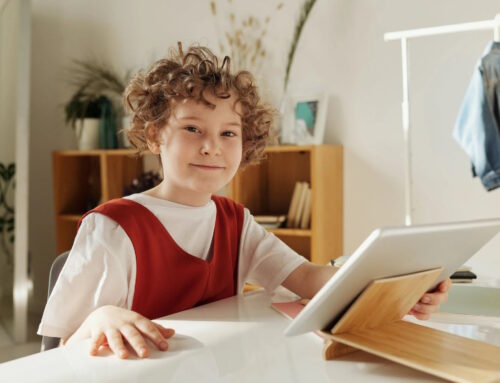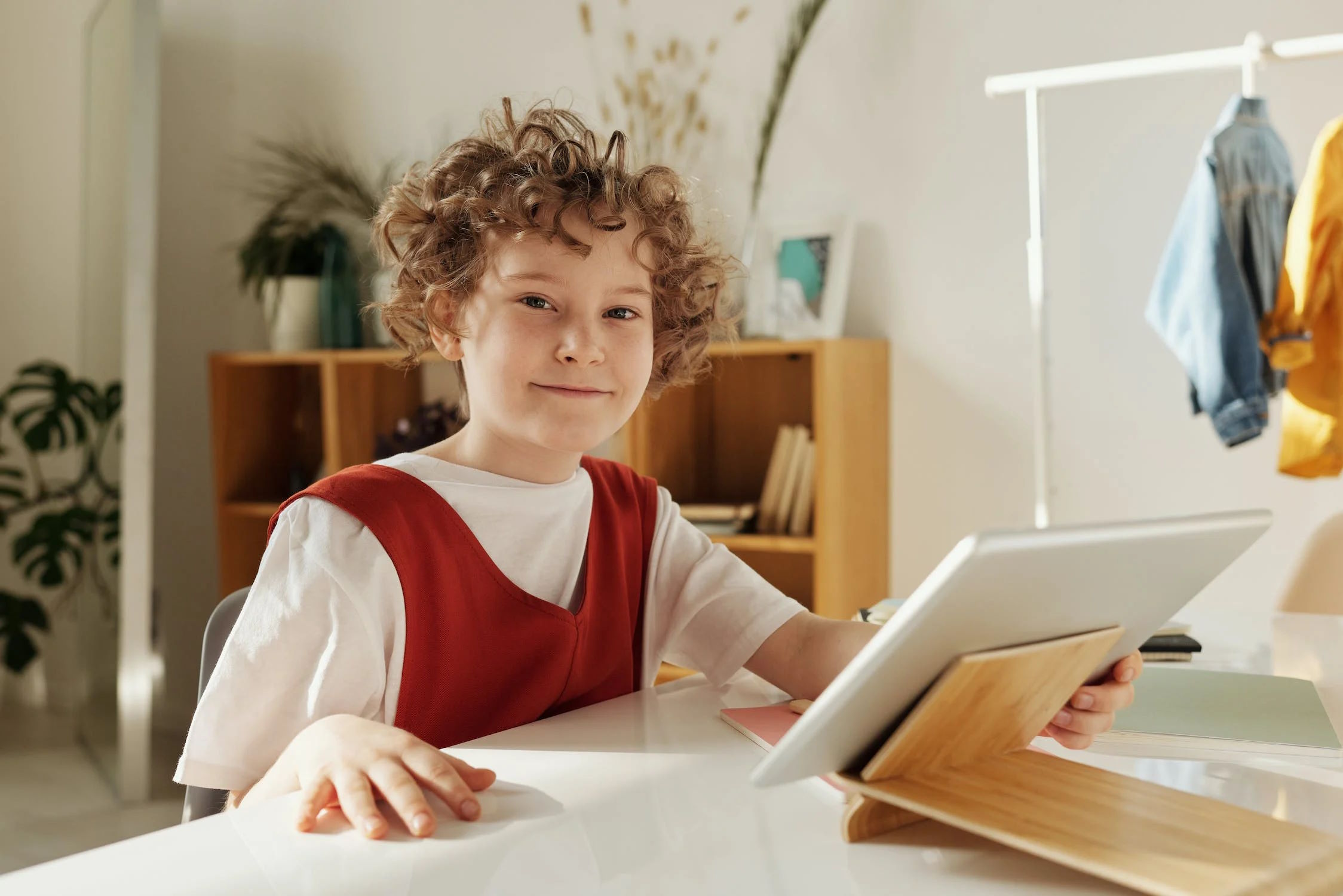
A major global “tech” event, held every year, the “Consumer Electronics Show” (CES) took place from 9 to 12 January in Las Vegas. On this occasion, two French companies stood out, with innovations designed to help people with dyslexia. Overview of the “Lili for life” screen, developed by the company of the same name, and the Lexilens screen, developed by the company Abeye.
The “Lili for life” screen, following on from the “Lili” lamp
In 2022, the Rouen-based start-up Lili for life had already chosen CES to present its “Lili” lamp, designed to make reading easier for people with dyslexia. The company’s working premise is that these individuals have two dominant eyes, unlike “normal readers”. This creates an overlap of images, which makes reading particularly difficult.
The big innovation in its approach for dyslexic people is that it allows the flicker frequency to be adjusted, creating a stroboscopic effect. Thanks to this, the lamp helps reduce fatigue, improve concentration and reading fluency. By extension, it also helps build self-confidence.
Two years on, the Rouen start-up is back with a version of its technology for computer screens. The prototype, presented at CES 2024, is due to be rolled out, allowing it to go on sale in September 2024. It will then attach like a standard screen to any computer unit.
The Lexilens screen, following on from reading glasses for people with dyslexia
In 2020, the French start-up Abeye presented its reading glasses at CES in Las Vegas, backed by Atol les Opticiens. It left the event with an “Innovation Award“, quickly followed by other accolades (SILMO d’Or 2019, Trophées de l’Avenir Europe 1, Trophée RMC de PME 2023, Trophée de l’innovation LSA 2020…).
The result of discoveries made by two laser physics researchers, Lexilens glasses filter out mirror images that “clutter” the visual cortex and cause reading difficulties for people with DYS disorders. Controlled by an electronic device that can be activated with a simple press on the temples, the lenses activate and separate the letters, space out the lines and make reading easier.
An Ipsos study for Lexilens reports excellent results: 92% of glasses wearers reported a change in their lives, and 86% saw an improvement in their school results…
In 2024, Abeye is back at CES in Las Vegas with a version of its technology for computer screens. With it, there’s no need to wear Lexilens glasses to improve word fluency and comprehension. Available for pre-order, the screen won’t be delivered until September 2024.
Feel free to discuss these innovations with the professionals on the Ora-Visio platform, who specialise in DYS disorders. Any device that could help your children in their schooling and everyday life is worth a closer look, isn’t it?