It often comes as a rude awakening for parents: their child with dyslexia, dysorthographia or ADHD is sitting the brevet or the bac this year — and no one told them that a speech therapy assessment was needed before 15 December to stand a chance of getting extra time (tiers-temps). By the time they find out, it is often too late to go through the usual channels.
This article explains exactly what extra time is, who is entitled to it, how to apply for it — and above all how to get the necessary speech therapy assessment in time, even if you find out about the situation late.
Book a speech therapy assessment for extra time
Report within 7 to 10 days · Recognised for exam adjustments · State-certified speech therapists
Extra time: what exactly are we talking about?
Extra time (tiers-temps, literally “one-third time”) is an exam time adjustment granted to pupils with a disability or a disabling health condition. In practice, it increases the length of each exam by one third: a 3-hour exam becomes 4 hours, a 2-hour exam becomes 2 h 40.
It is not the only possible adjustment. Others can be granted at the same time:
- A separate exam room or smaller group (for pupils who need calm and concentration)
- Use of a computer with writing-aid software (spell checker, text-to-speech)
- A secretary or scribe (for pupils who cannot write themselves)
- Enlarged exam papers, adapted font
- Additional scheduled breaks
These adjustments can be combined. They never appear on transcripts or on Parcoursup — there is no “mention” of any adjustment in the pupil’s academic record.
Who can benefit from extra time?
Extra time is for pupils with:
- A diagnosed specific learning disorder: dyslexia, dysorthographia, dyscalculia, developmental language disorder (dysphasia), dyspraxia
- ADHD with a demonstrated impact on exam performance
- A recognised physical, sensory or psychological disability
- A chronic or disabling illness (epilepsy, inflammatory diseases…)
⚠️ Having a PAP (Plan d’Accompagnement Personnalisé, a personalised support plan) in class does NOT automatically give the right to extra time in national exams. The PAP organises day-to-day adjustments within the school — but official exams (brevet, bac) require a separate procedure, approved by the school doctor and the rectorat (regional education authority).
The deadline: what too many families don’t know
This is the most critical point — and the one families know least about. Applications for exam adjustments must be submitted early in the school year, generally before the start of the year or at the latest 3 months before the exams. Some académies (education regions) apply a deadline of 15 December of the school year preceding the exam.
In practice:
- For the brevet des collèges (June): ideally submit the application between September and December of the 3e year
- For the baccalauréat (June): ideally submit the application between September and December of the terminale year
- Each académie has its own dates — make sure you check your rectorat’s website as soon as school starts in September
⚠️ An application submitted after the deadline is generally refused for the June session. The rule is strict — even if your child has had adjustments in class for years. A new application must be submitted every school year, even if the situation is the same.
The speech therapy assessment: an essential part of the application
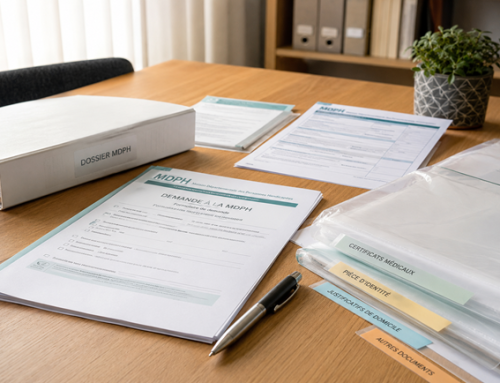
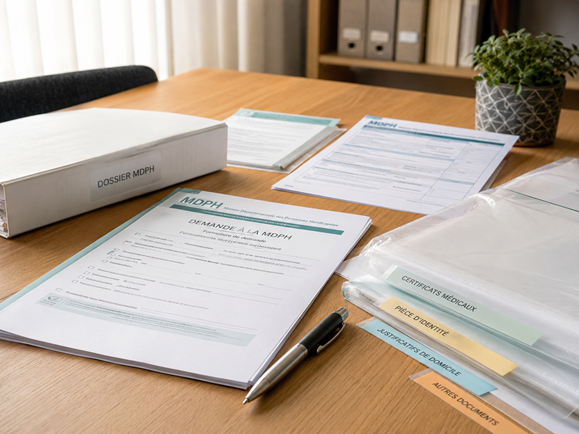
Several documents are needed to put together the exam adjustment application. The speech therapy assessment is its backbone for all language and learning disorders:
□ A recent speech therapy assessment (generally less than 3 years old, sometimes less than one year depending on the académie)
□ A detailed medical certificate written by the school doctor or a specialist — it translates the diagnosis into its impact on exam conditions
□ The current PAP or PPS (if the pupil has one — the procedure is simplified)
□ A specific académie form depending on the type of exam (available from the school or the rectorat)
If your child has never had an assessment, or if the last one is more than 3 years old, you need to get a new one before putting the application together. This is where timeframes become critical: an office assessment can mean 12 to 18 months on a waiting list — a delay that is incompatible with submitting an application in December if you start in October.
The solution: an online speech therapy assessment to meet the deadlines
It is the only realistic solution for families who discover the situation in September or October and must submit their application before December. A teleconsultation assessment via ORA-VISIO can be scheduled within a few days, with a report delivered within 1 to 2 weeks (it can be available within 48 hours).
This report has exactly the same value as an assessment carried out in an office for exam adjustment applications. It is produced by a state-certified speech therapist and includes the scores obtained in standardised tests, the stated diagnosis and the recommended adjustments — exactly what the school doctor and the rectorat expect.
A typical timeline for a family starting in October:
- Week 1: appointment booked on ORA-VISIO, assessment carried out
- Weeks 2-3: report received
- Weeks 3-4: appointment with the school doctor, complete application put together
- Before 15 December: application submitted to the school / rectorat
This timeline is achievable. No time to lose.
Book a speech therapy assessment for extra time
Report within 7 to 10 days · Recognised for exam adjustments · State-certified speech therapists
The procedure step by step
Step 1 — Get or update the speech therapy assessment
If the assessment is more than 3 years old or has never been done, this is the first priority. Choose an online assessment if office waiting times are incompatible with your timeline. The report must explicitly mention the recommended exam adjustments (extra time, computer, separate room…).
Step 2 — Make an appointment with the school doctor
The school doctor is the linchpin of the procedure. They write the medical certificate sent to the rectorat and approve the requested adjustments. Make an appointment as early as September — slots are rare and fill up quickly. Bring the speech therapy assessment, existing medical reports and the PAP or PPS if the pupil has one.
Step 3 — Put the application together and submit it to the school
The head teacher coordinates the submission of the application. They gather the documents (medical certificate, assessment, académie form, PAP/PPS) and send them to the rectorat. Some académies offer a fully online procedure. Ask for an acknowledgement of receipt of the submission.
Step 4 — Approval by the rectorat
The rectorat’s exam adjustment service (SAE) processes the application and gives notice of the adjustments granted. This notice is sent to the school and to the family. If the application is refused or the adjustments are insufficient, an appeal can be made to the rectorat.
Step 5 — Check consistency with classroom adjustments
An often overlooked tip: check that the adjustments used in class day to day (PAP) match those requested for the exam. A pupil who has never used a computer in class will find it hard to justify needing one for the bac. Ensure this consistency from the start of the school year.
FAQ — Extra time and exam adjustments
Is extra time granted automatically if the pupil has a PAP?
No. The PAP is an internal school document that organises day-to-day adjustments — it does not apply to national exams. A separate procedure must be started every year with the school doctor and the rectorat to obtain adjustments for the brevet or bac exams.
Does extra time appear on the diploma or on Parcoursup?
No, never. Adjustments do not appear on any official document accessible to higher education institutions, examining boards or employers. The pupil obtains their diploma under the same conditions as their classmates, with no special mention.
Can extra time be combined with other adjustments?
Yes, adjustments can be combined. A pupil can benefit at the same time from extra time, a separate room and permission to use a computer. All these adjustments must be justified by the needs identified in the assessment and the medical certificate.
Does extra time also apply to the specialty exams and the grand oral?
Yes. Once granted, extra time applies to all exams of the qualification concerned, including the specialty exams, the bac’s grand oral, and the early exams. The rectorat’s notice specifies the exams concerned.
Conclusion: act at the start of the school year, not in January
Every year, families miss the deadline for lack of information — and their child sits the brevet or the bac under conditions that do not reflect their real abilities. It is an avoidable injustice.
If your child is sitting an exam this year and you do not yet have a recent speech therapy assessment, act now. An online assessment lets you get the report in less than two weeks — and meet the administrative timeline.
Book a speech therapy assessment for extra time
Report within 7 to 10 days · Recognised for exam adjustments · State-certified speech therapists