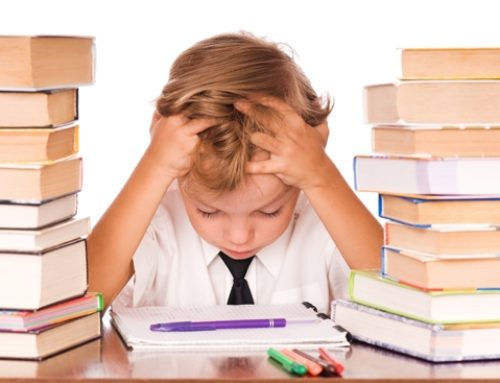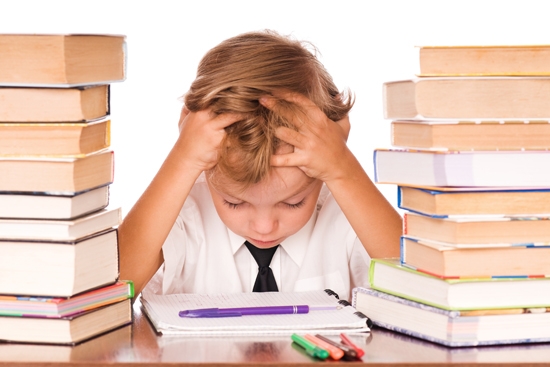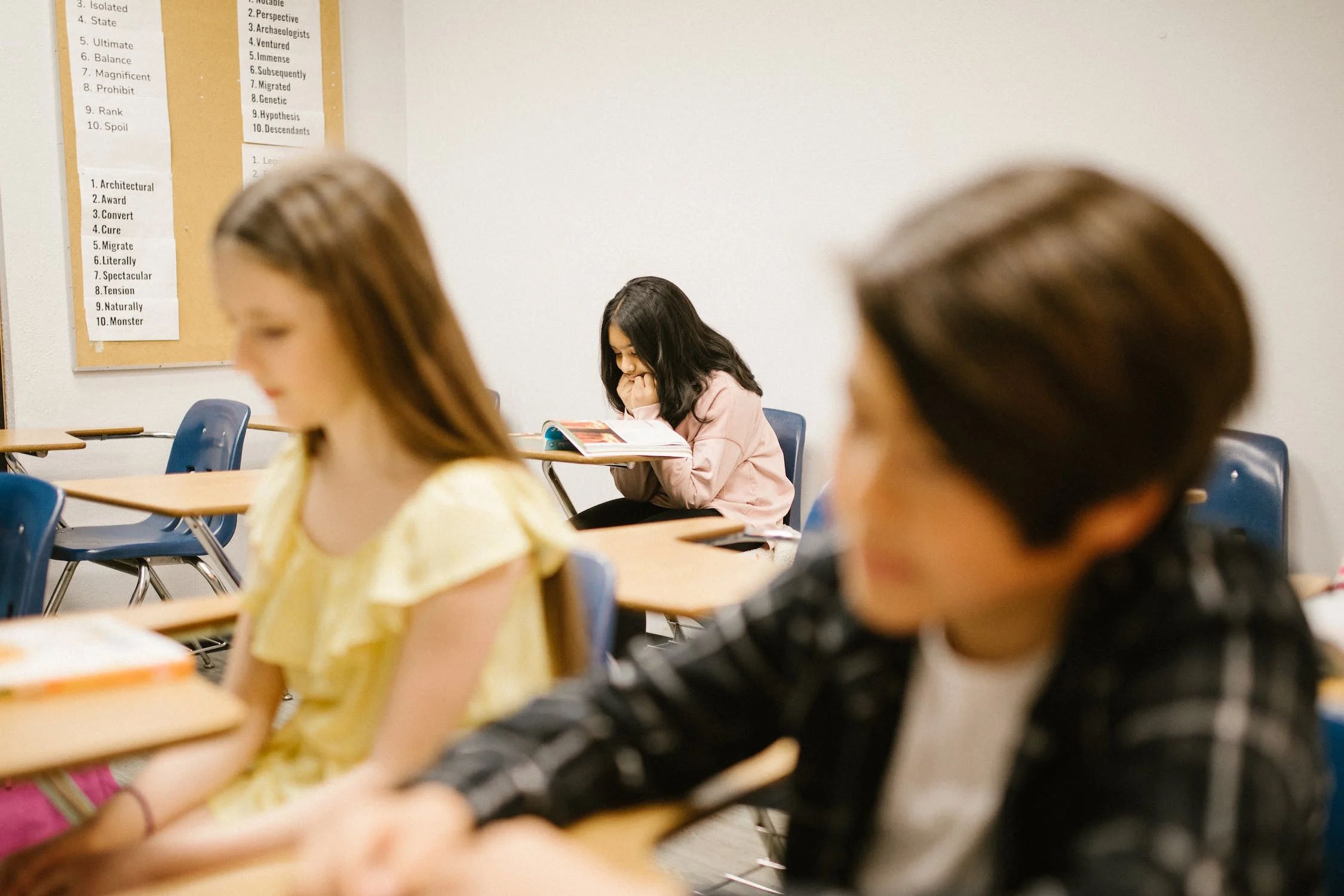
Contrary to popular belief, gifted children will not necessarily excel at school, nor will they necessarily thrive there. Indeed, in our collective imagination, academic success is directly linked to intelligence. Yet many other skills also come into play, such as social skills, emotional regulation, behavioural control, the desire to learn, and more. Let’s explore the 3 main difficulties faced by a gifted (HP) child at school.
The boredom of an intellectually precocious child
Thanks to their above-average IQ, gifted children think fast, naturally making connections between prior knowledge and new information. As a result, they memorise and understand faster than others. Like an adult sitting in a Year 1 (CP) class, they quickly get bored, becoming restless or distracted or, conversely, switching off and getting lost in their thoughts. As a result, they miss information and build up gaps in their knowledge…
“During lockdown, Lily-Anne was in control of her own learning pace. Where her classmates needed three four-hour lessons to grasp a concept, she needed one hour. The rest of the time, she read… Going back to school was impossible,” says the girl’s father[1]. Being ahead is not a false problem!
Lack of effort and study methods when learning
A gifted child doesn’t need to put in much effort to learn to read or count; key concepts are learned implicitly, without difficulty. But once they reach a certain school level, their intellectual “head start” is no longer enough. Without willpower and self-discipline, they struggle to cope with the workload that their classmates had to build up gradually throughout primary school.
For Gaspard, a 14-year-old boy, when the gifted diagnosis came in, “I was tempted to think: ‘Oh great, I’m a genius.’ But I feel less intelligent than average and I don’t have any particular abilities…”1 A gifted child often feels out of step, frustrated, poorly suited to the French school system… Being ahead is not a false problem!
The extreme sensitivity of a gifted child
Intellectually advanced, a gifted child can very quickly appear emotionally immature: the gap between their level of reasoning and their emotional development can be a source of great suffering. Extremely sensitive, intolerant of injustice, and touchy, they often develop interests very different from those of their classmates—a tendency that can lead to isolation and social difficulties…
Clarence, 14, remembers: “In Year 4 (CE2), I became depressed. I had no friends, I was bored in class, and I said I wanted to die. They had me take the test. I skipped a year, it was a bit better, but my friends bullied me. When I got a good grade, people would say: ‘It’s easy for you.'”1 Being ahead is not a false problem…
Don’t hesitate to put your gifted child in touch with one of our psychologists : available online on the Ora-Visio platform, our professionals understand the challenges behind these intellectual abilities and can offer them knowledgeable, attentive support!
[1] Citation: https://www.nouvelobs.com/societe/20230105.OBS67948/a-l-ecole-des-hauts-potentiels-j-ai-l-impression-d-etre-un-pokemon.html