Scooling is a recent, specialised training programme that helps school coaching professionals better understand the contributions of developmental psychology and current neuropedagogy. Thanks to this integrative, innovative approach, DYS children develop techniques for working with their disorders, in a supportive environment. Here’s an overview.
What is Scooling?
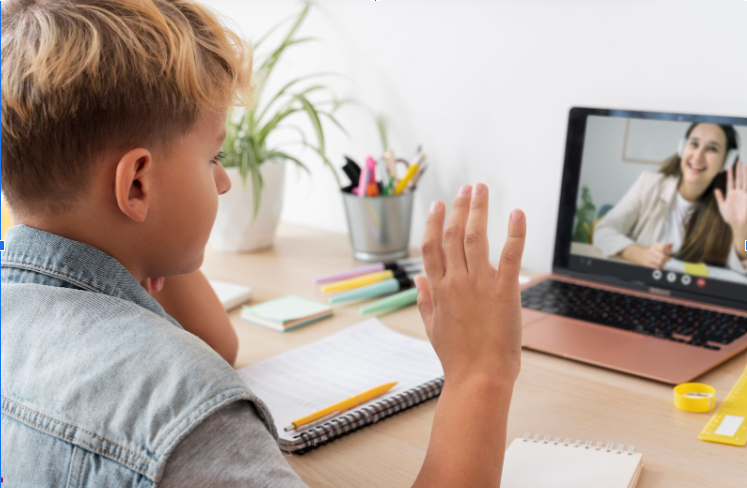
A school coach trained in Scooling supports children and teenagers in their work by introducing a new learning dynamic. This innovative approach lets each child learn how to learn, by developing strategies suited to their own difficulties. Better still, for every obstacle identified (whether tied to a specific area of learning or a particular emotional state), the Scooling practitioner is able to find an alternative way forward.
As an expert in the child’s brain, the practitioner helps the child understand how their memory works so they can use it better to retain lessons and knowledge. Together, they build the child’s motivation, their self-confidence, and their sense of competence.
Good to know: Scooling training is not certified by the RNCP (France’s National Directory of Professional Certification).
Who is this school coaching approach for?
Even though Scooling is designed for all children and teenagers without distinction, its innovative approach proves particularly valuable for those dealing with various disorders. This can include psychological difficulties (school phobia, anxiety, fear of success as much as of failure…), learning difficulties (dyslexia, dyspraxia, dysorthographia, dysgraphia, dysphasia, and dyscalculia), and DYS-executive disorders or ADHD (Attention Deficit Disorder with or without Hyperactivity).
The school coach can also help gifted children. Indeed, “gifted” individuals typically have an atypical way of functioning that can leave them feeling uncomfortable at school.
Beyond the techniques developed to overcome each difficulty at school, the practitioner works in a non-school setting, within a supportive climate that is especially reassuring for the child. These are all essential factors for the child’s success and personal development.
How does this support work?
Traditionally, the first session is used to get familiar with the approach, take stock of the situation, set objectives, and decide on the pace and number of sessions.
The Scooling process then unfolds around 3 stages: discovering how you function and your own mental habits (through playful experiences), understanding them and developing effective, tailored strategies. The child or teenager quickly identifies their own resources and learns to draw on them. Over time, they come to feel “capable of,” which in turn increases their investment in learning and builds their independence with it.
The Scooling school coach can regularly organise check-ins with parents. Finally, the process wraps up with one last session together with them.
When it comes to school coaching for DYS children, it’s best to turn to professionals familiar with this population, such as the practitioners on the Ora-Visio platform, available online and attentive to the specific needs of each child or teenager. Don’t hesitate to ask them about this innovative, still fairly new approach, to get their professional take on it!