While some people dread Halloween night, others live with a knot in their stomach every single day. For this phobia, the monster is school itself! Between 1% and 3% of pupils in France are thought to be affected by this disorder. When should parents worry? What consequences does it lead to? How can you help a child suffering from school phobia? Here is an overview of a phenomenon that affects pupils of all ages.
Portrait of a terrifying phobia
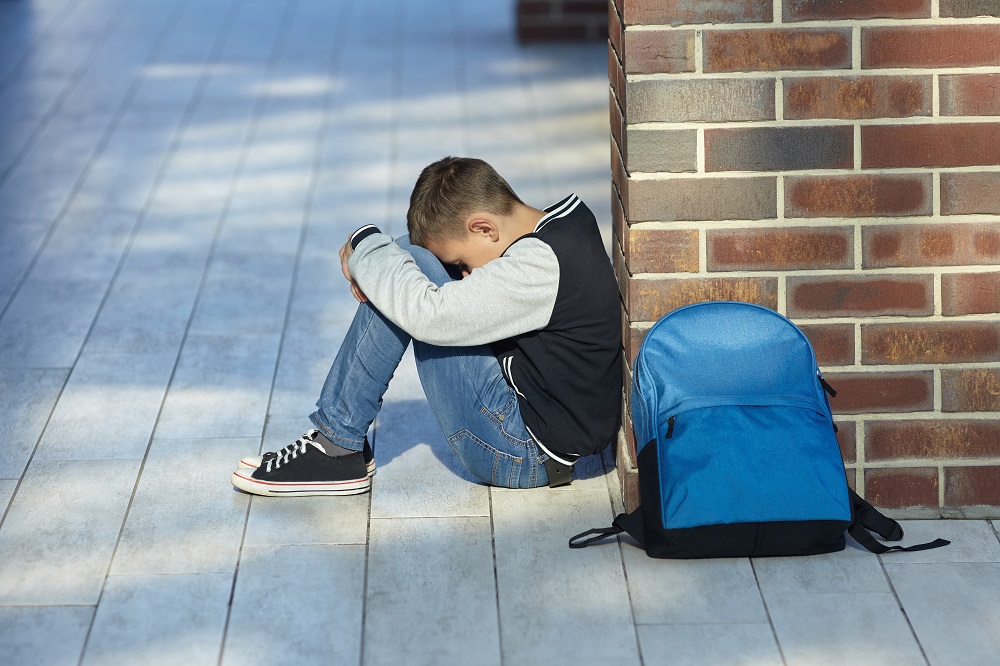
Well known among children and teenagers, school phobia shows up as intense anxiety and severe distress at the thought of going to class (primary school, secondary school, sixth form, or university). These pupils are no less interested in their studies, and their desire to learn isn’t diminished. Yet as they approach the school environment, they’re overcome with sheer panic. It becomes impossible to talk to them or reason with them. The child will only calm down once convinced they won’t be going to school, and may promise, in good faith, to go back the next day. But without success.
“A manifestation of major anxiety, often with panic, linked to attending school and preventing it from continuing in its usual form.”
Definition from the French Classification of Mental Disorders in Children and Adolescents (CFTMEA), R-2012
Which pupils are affected?
School phobia affects boys and girls without distinction, high achievers and lower achievers alike, regardless of socio-professional background. It can appear at any age, although some periods carry a higher risk:
- Starting CP (around age 6)
- From starting 6ème through to starting 4ème (ages 11, 12, 13 and 14)
Recognising the symptoms of school phobia
Some children and teenagers make themselves ill as the time to go to school, secondary school, or sixth form approaches. This fear disables them to the point where they simply can’t bring themselves to enter the building. Physical symptoms vary and are numerous.
Among the most common:
- insomnia,
- a knot in the stomach,
- nausea and vomiting,
- dizziness,
- fainting spells.
In terms of behaviour, notable reactions include:
being unable to leave the house to go to school,
- a state of panic,
- being open and honest with parents about the situation,
- complete absenteeism from class,
- continuing to take part in extracurricular activities.
It’s important not to confuse school phobia with other phenomena such as truancy, which involves partial absences hidden from parents. Refusal to engage with schoolwork is more a matter of dropping out, and unlike phobia, the pupil keeps physically attending school. Finally, video game addiction can sometimes be mistaken for school phobia. In this case of addiction, though, parents should watch for an obsession with a virtual world and heavy use of computers and games consoles.
The causes and consequences of the fear of school
Unfortunately, this phobia has no established explanation. The causes can be varied, but they all share one thing in common: heightened sensitivity in the child. Some cases appear linked to a disruptive event such as a divorce, a house move, a change of school, or the loss of a loved one. Sometimes the cause is linked to a trauma the child experienced at school: bullying, extortion, mistreatment, mockery…
What future awaits a pupil suffering from school phobia?
The consequences are immediate. Significant absenteeism raises the risk of dropping out of school altogether if nothing is done to help the child or teenager. A break not only from schooling but also from social life, with depression, and social and emotional isolation, are real risks. Future career prospects are at stake. The first priority, then, is a very gradual reintegration into the school environment, supported by psychological care.
Helping a child with school phobia
This disorder, which can appear overnight, is deeply unsettling for parents. How should you react to a child who refuses to go to school? The right response in this situation is to accept that your child isn’t putting on an act and is genuinely suffering.
Adopting the right practices
The earlier support begins, the more favourably the disorder tends to evolve. After talking with your child, the next step is to open a dialogue with the school as quickly as possible, so as not to break the link with the school environment.
To be avoided at all costs: letting absences become a chronic situation!
A meeting with the child’s main teacher, the head teacher, and the school’s pastoral/guidance lead will make it possible to explain the pupil’s terror. Various arrangements can then be considered: a lighter timetable, tailored hours to avoid contact with other pupils at arrival and departure times, exams and tests that can be taken at home… All these measures fall under an Individualised Support Plan (known in France as a “PAI”), drawn up together with the child’s doctor to support their reintegration into school within a therapeutic framework.
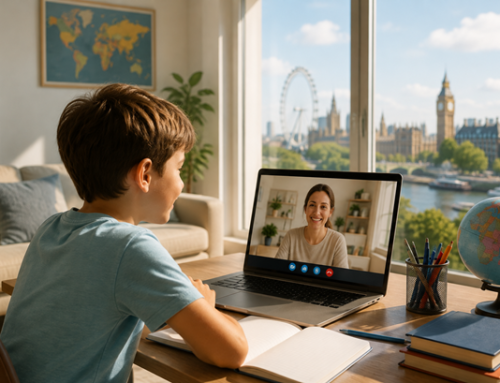
Some parents will be tempted by distance-learning courses. Be warned: following lessons remotely is absolutely not an appropriate response for a pupil suffering from school phobia. However, to help catch up on subjects affected by repeated absences, private online lessons, such as those offered by the ORA platform, make it possible to catch up on lost ground in one or more subjects and support a smoother return to school. French, maths, philosophy, history-geography, and English tutors, among others, are available for online support lessons, following a schedule agreed with the struggling pupil’s family.
Getting your child treated
To understand the causes of a child’s or teenager’s phobia and support them properly, it’s recommended to consult a psychologist or psychotherapist. Unfortunately, child psychiatry appointments aren’t easy to come by in France. Options then include local youth support centres (there is at least one in every French département) or child mental health centres staffed by psychiatrists, psychologists, and speech and language therapists.
For fast support that doesn’t disrupt a family’s daily routine, the ORA platform offers access to qualified psychologists. Among these child and teen psychologists, some specialise in school phobia. Parents can book online consultation appointments with them, just like an in-person session.
Made up of individual, and sometimes family, psychotherapy, treating school phobia is complex. It calls for close collaboration between the pupil, their family, their school, and healthcare professionals. When appointments would otherwise mean tiresome travel, online psychologist consultations are a real opportunity, helping support consistency and recovery.