Every year, DYS Awareness Day (held in October) is an opportunity to take stock of the situation, particularly regarding the care and support given for these learning disorders. Today, it’s clear that diagnosis is falling behind schedule, due to a shortage of professionals qualified to recognise them.
DYS disorders affect 1 to 2 children per class
According to the latest figures from the French Federation of DYS Associations, neurodevelopmental disorders affect 6 to 8% of children, which works out to 1 to 2 children per class.
Dyslexia, dyspraxia, and dysphasia are often combined with other disorders, such as dyscalculia, dysorthographia, or dysgraphia. Not to mention ADHD, Attention Deficit Disorder, with or without hyperactivity.
Note that 40% of children with DYS actually have multiple DYS disorders, affected by several conditions at once.
Years of uncertainty before diagnosis
Unsurprisingly, it’s usually parents and/or teachers who first suspect a learning delay, whether in language, reading, or coordination.
“When parents suspect a disorder, they need a speech-language assessment to get a diagnosis. But speech-language therapists are overwhelmed, due to the shortage of practitioners. Very often, they have no choice but to put patients on a waiting list for several months,” explains Aurélien Bresson, vice-president of the French National Federation of Speech-Language Therapists.
For DYS Awareness Day, many parents share their long journey before finally getting a diagnosis. Like Camille Therond and her son, who searched “from moyenne section right through to CE2,” consulting numerous specialists before finding one who put the term “ADHD” to his behavioural problems.
Lack of available professionals and long waiting times
With an average density of 135 speech-language therapists per 100,000 minors (2019 figures), waiting times for a first appointment can reach 18 months in some areas.
For ADHD, “the average time to reach the correct diagnosis is currently estimated at between 3 and 6 years,” notes Olivier Bonnot, professor of child and adolescent psychiatry at Paris-Saclay University. Despite how common the disorder is, diagnosis is limited to too few specialists, unevenly spread across the country.
Ora-Visio, an answer to these waiting times
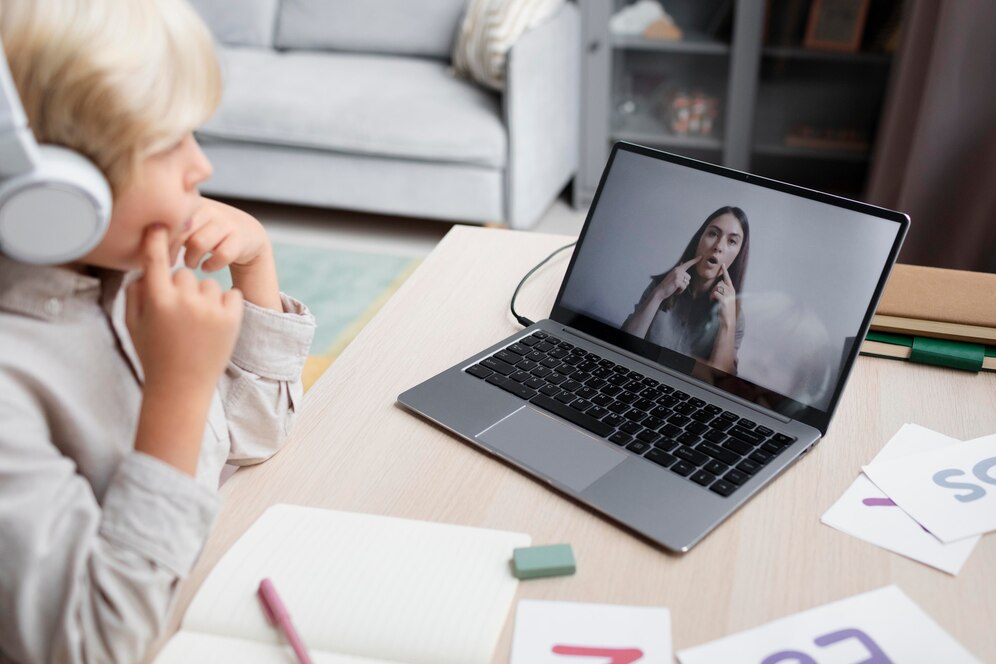
The Ora-Visio platform can offer a solution to these difficulties: it brings together professionals specialised in DYS disorders and ADHD, available remotely, to overcome geographical inequalities and make the most of everyone’s schedule.
A simple connection with a computer or tablet equipped with a camera is all it takes to book an appointment with a speech-language therapist, a psychologist, or even an occupational therapist, a graphotherapist, and more.
Note that, although still not widespread in France, teleconsultation is just as effective as an in-person appointment. At the very least, it has the merit of significantly reducing waiting times for consultations.