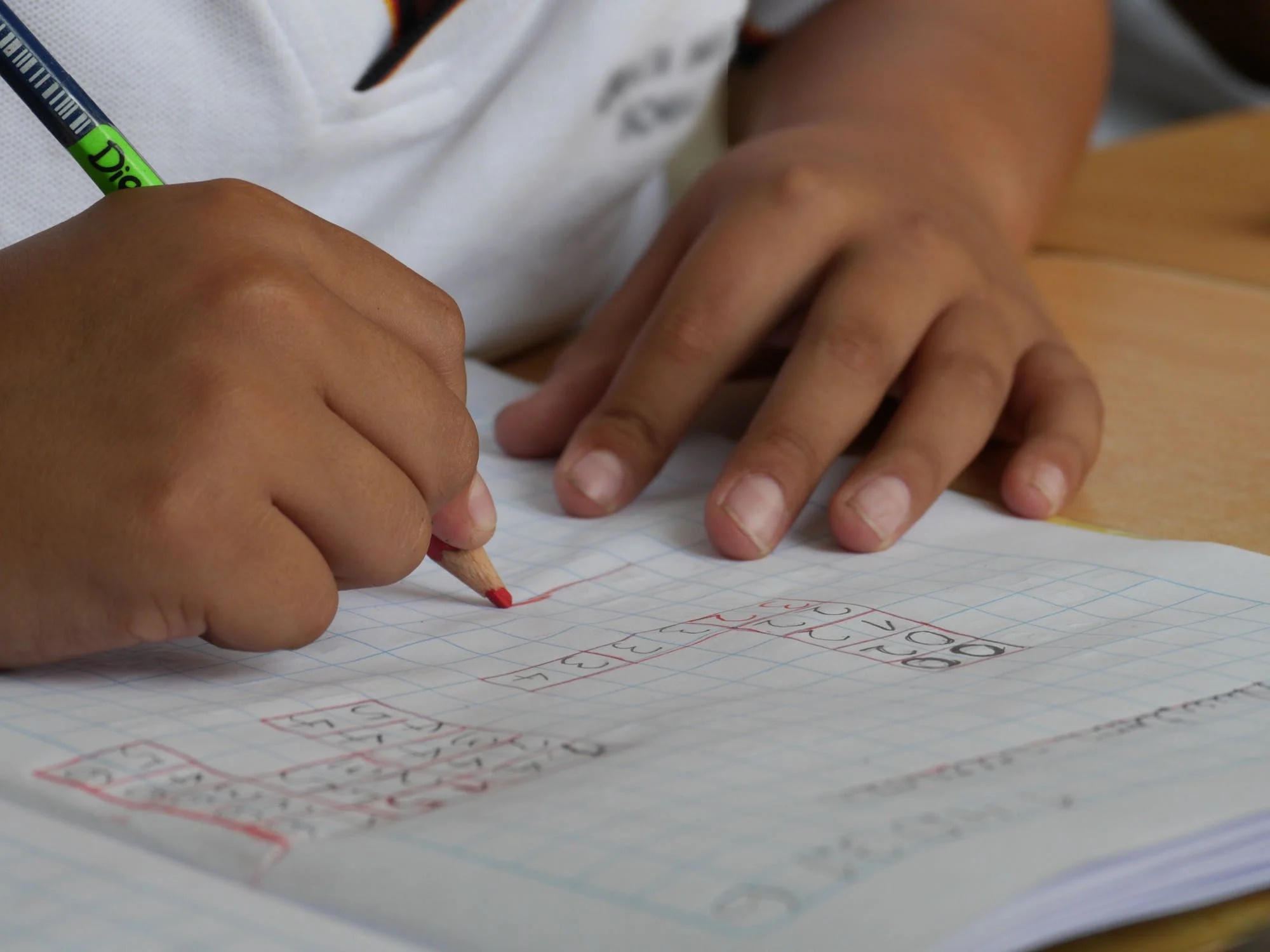
Traditionally, dysgraphia appears at primary school, but it can also come to light at secondary school, when a child who has managed to compensate for their difficulties until then becomes exhausted and lets up their efforts. A genuine obstacle to schooling, this disorder must be diagnosed as early as possible to limit the risk of the child rejecting learning altogether. Working on a dysgraphic child’s handwriting to make it more legible and easier to produce, the graphotherapist begins their care with the anamnesis…
What is the anamnesis?
Derived from the ancient Greek “anamnêsis,” meaning “the act of recalling to memory,” the term anamnesis allows the graphotherapist to piece together the patient’s full history, using the child’s own memories as well as those of their family. Through this thorough interview, the professional quickly reaches a formal diagnosis, while limiting the number of further tests needed.
Both recent and older, the child’s medical history lets the graphotherapist rule out certain leads and narrow down the hypotheses. Then, thanks to their semiological approach — that is, the study of symptoms and clinical signs — the graphotherapist can establish a diagnosis.
Who attends this first appointment?
Generally, the anamnesis takes place with the dysgraphic child and their parents. Since the goal is to review the different stages of the child’s development, from birth to the onset of the disorder, their presence is strongly recommended.
For this first meeting with the graphotherapist, parents should bring all necessary documents to support the child’s school and personal history, as well as any assessments carried out by other specialists, such as a speech therapist, psychologist or psychomotor therapist.
How does the graphotherapist’s examination unfold?
During the anamnesis, the parents, the child and the graphotherapist will talk together: they will go over the patient’s history, skills, difficulties and fears. The professional will focus on why the graphotherapy consultation was sought, the description of the disorder, as well as when the symptoms first appeared, their severity and their impact on the patient’s daily life.
The graphotherapist will then look at how the child’s handwriting has evolved in their exercise books, noting the first signs of difficulty and teachers’ comments, and asking the child about how they feel about it…
The whole point of the anamnesis is, on one hand, to listen closely in order to identify the key information for diagnosis, and on the other, to be as honest as possible with the professional.
Once the diagnosis is made, graphotherapy care continues with a graphomotor assessment (around 2 hours of tests) and re-education, built around 45-minute sessions, the number of which varies depending on the problem and the severity of the difficulties encountered. Note that if the problems are not related to dysgraphia, a simple handwriting improvement programme can be started instead.
Don’t hesitate to contact one of our online graphotherapists on the Ora-Visio platform: as available as they are attentive to your needs, they will know how to conduct this anamnesis to reach the diagnosis that is so essential to your child’s healthy development.