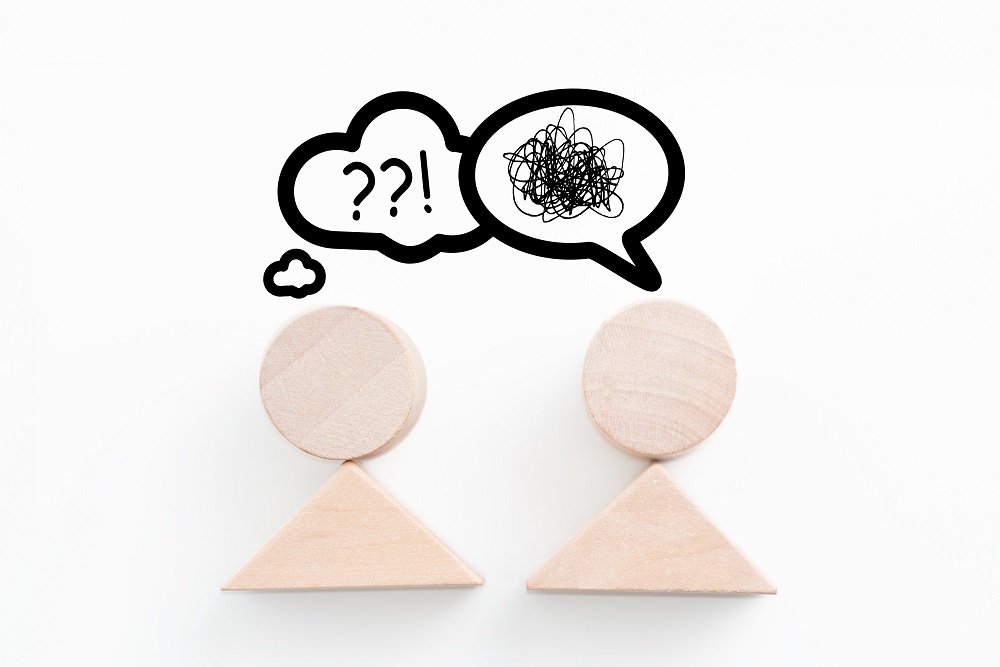
What do a person who has lost their words and someone who drowns their speech in an endless stream of jargon have in common? Aphasia. Taking many different forms, this disorder affects language. Nearly 300,000 people are affected by it in France. What is aphasia? How do the symptoms show up? Which treatment should you choose? Here’s an overview of a communication disorder that can occur at any age.
Defining aphasia
Nobody is born aphasic, they become aphasic. Unlike a DYS disorder (dyslexia, dyscalculia, dysorthographia, dysexecutive syndrome…), a person with aphasia used to speak perfectly well before an event caused them to lose the use of language. This is why this condition can affect children as well as adults. It involves damage to the areas of the brain dedicated to language. This communication disorder can affect spoken or written expression and/or comprehension. Language, reading, writing and expressive gestures can all be affected.
Triggering factors
The leading cause of aphasia is stroke. Anyone who has suffered damage to the brain, specifically to the areas dedicated to language, can develop aphasia. Heart attack, aneurysm rupture, road accidents with head injuries, and the appearance of a tumour can all cause aphasia.
The different forms of aphasia
- Broca’s aphasia (also called expressive, anterior, or non-fluent aphasia). It is characterised by a severe reduction in speech. The person searches for words to the point of being unable to express themselves at all. They speak little and very slowly and have difficulty writing. However, they understand perfectly what is said to them.
- Conduction aphasia. It is characterised by frequent hesitations and choppy speech, with difficulty finding the right words. The person uses paraphrasing to make up for their lack of vocabulary, and slips into speech that is hard to understand. Aware that they are mixing up words and sounds, a person with this type of aphasia will generally try to correct themselves. It is a form of Wernicke’s aphasia in which the patient has nonetheless retained the ability to understand.
- Wernicke’s aphasia (also called receptive, sensory, or posterior aphasia). It shows up as an inability to understand what is read or heard. Although the patient may speak fluently, they aren’t always aware that their speech is nearly incomprehensible, as they mix up paraphrases, words and sounds. The disorder affects both spoken and written language.
- Primary progressive aphasia. Less sudden than other forms of aphasia, this one begins with word-finding difficulty. Those affected are fully aware of this distressing, partial vocabulary loss. In its non-fluent form, progressive aphasia gradually reduces the rate of speech. Writing and spelling also deteriorate. Conversely, in its fluent form, speech turns into incomprehensible jargon. The person has difficulty understanding what is read or heard and can no longer read aloud or repeat what they say.
- Global aphasia. This is the most severe form of the condition. The person can neither express themselves nor understand those around them, whether in writing or speech.
What are the symptoms of aphasia?
Spotting the signs of the disorder
When someone struggles to express themselves spontaneously, searches for words, or conversely produces an incomprehensible stream of speech, aphasia should be suspected. Of course, when a person can only speak in disjointed syllables, mixes up letters, and no longer understands what is said to them, seeking medical attention becomes urgent.
Here is a non-exhaustive list of the symptoms that reveal aphasia in children and adults:
sentence structure is reduced to a bare minimum, such as “go house”,
- vocabulary is very limited,
- pronunciation is impaired,
- writing deteriorates (spelling and sentence structure),
- comprehension declines,
- articulation and pronunciation become poor,
- speech becomes unintelligible.
Making a diagnosis
Depending on the severity of the case, the GP may be the first to suspect aphasia. In the case of an accident, it will be the emergency doctor who detects sudden aphasia. In all cases, the diagnosis is made by a neurologist. This must be complemented by an assessment from a neuropsychologist, who will determine which type of aphasia the patient has. Once the cause has been identified, a CT scan or MRI may be needed.
Helping a person with aphasia
Treating the disorder
The underlying cause of aphasia must be treated as quickly as possible to give the patient the best chance of quickly regaining the use of language. Treatment therefore addresses the root cause of the aphasia and helps improve overall health. Is this treatment enough on its own? No. The rapid recovery of language, both written and spoken, must be immediately accompanied by intensive speech therapy. It is during this phase that language abilities remain malleable. The speech therapist works with the patient to improve their verbal communication and help them rebuild their social connections. To take control of their disability and master alternative ways of communicating during treatment, speech therapy support is essential.
“We’re not talking about learning or relearning, because it’s not that the patient has forgotten some words and not others. That’s not how it works. It’s about whether access can happen or not, depending on the circumstances.”
Marie Nogues-Lassiaille, speech therapist
Fragile and disabled, a person with aphasia often dreads travelling, which can prove tiring or even dangerous. Rehabilitation at home is therefore the preferred option. With its network of speech therapists specialised in aphasia, ORA allows patients to benefit from online consultations anywhere in the world. Quick, regular appointments, no travel required, and rigorously selected practitioners: remote speech therapy is the ideal solution for treating aphasia.
Is the treatment equally effective for everyone? No, because it depends on the cause, extent and location of the brain injury. The intensity of the aphasia and the age of the person affected are also important factors. For example, children under 8 recover the use of speech and comprehension even if the brain injury is significant. For people over the age of 8, recovery typically occurs within three months, with full recovery that can take up to a year.
Everyday support
Partners, parents and loved ones of a person with aphasia also have a part to play. By choosing to address the child or adult using short, simple sentences that only require a yes or no answer, exchanges become less frustrating. Don’t hesitate to repeat the same information in different ways to make sure the person can understand it. To make conversation easier, it’s best to remove background noise that could get in the way. Finally, the chances of understanding and being understood by a person with aphasia are higher if they speak with only one person at a time.
What are the after-effects of aphasia?
Aphasia generally doesn’t lead to any other complications for the person affected. When the language and comprehension disorder appears (suddenly or gradually), it quickly stabilises and gradually fades, eventually disappearing thanks to solid speech therapy follow-up. The severity of aphasia symptoms and the patient’s age will affect the quality of recovery, but the ability to speak, write and understand is almost always regained. It’s worth noting that youth is a major advantage! Children do in fact recover from aphasia much more quickly than adults.