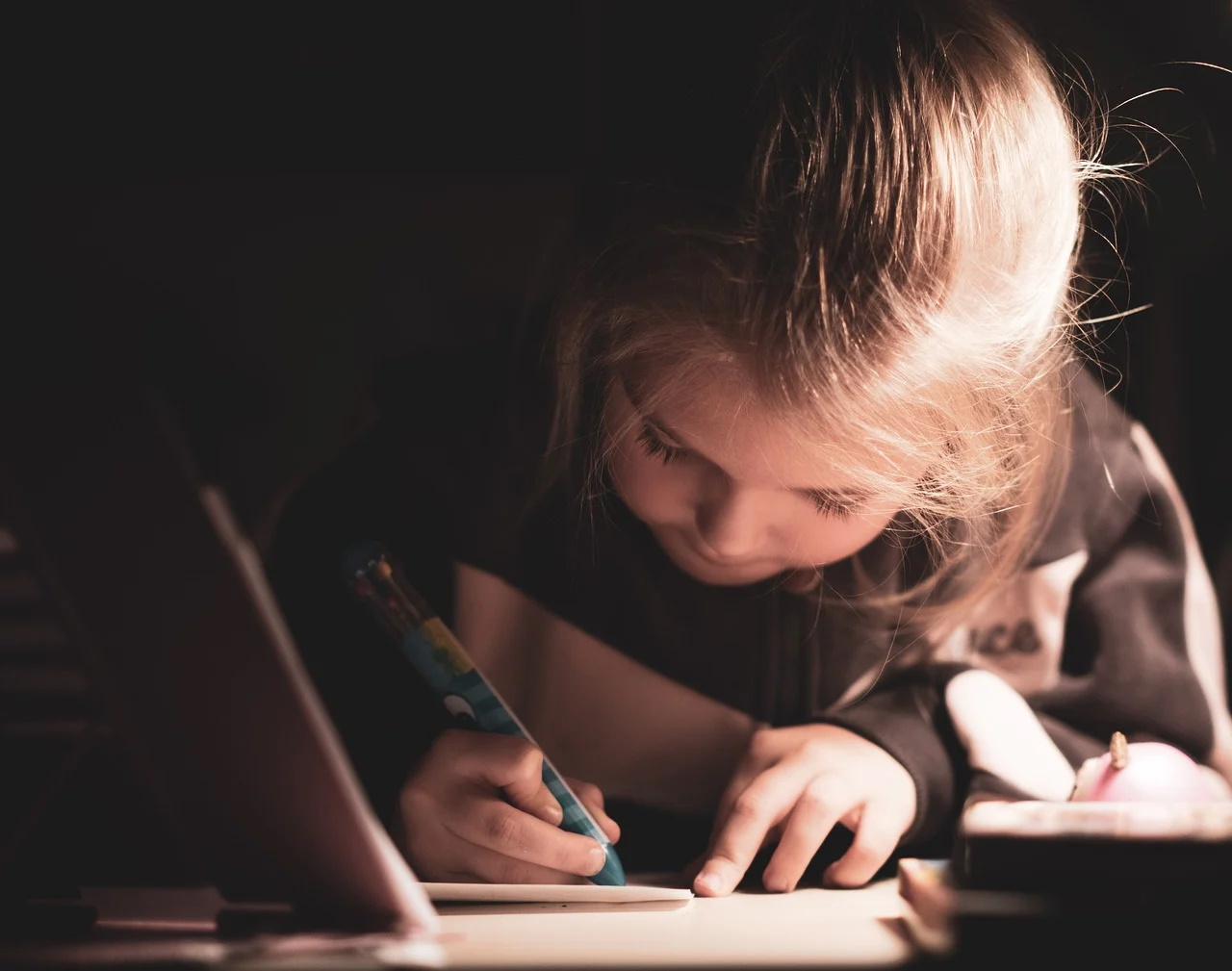
Whether your child struggles with dysgraphia (a disorder affecting handwriting), dysorthographia (a disorder affecting spelling), and/or dyslexia (a disorder affecting reading and word recognition), they can find the keys to understanding their difficulty with a handwriting professional. But do you know the difference between a graphologist, a graphotherapist, and a graphopedagogue? Only two of these experts can genuinely support your child in managing their difficulties, but their approach is completely different. Here’s a look at these 3 professions.
The graphologist deduces personality traits from handwriting
A graphologist’s role is to analyse a person’s handwriting to bring out the main traits of their personality. By following a rigorous method (letter size and slant, spacing between letters and lines, the angle of the writing, pressure applied to the page…), they reveal an individual’s character and way of thinking.
To this day, there is no recognised qualification for this profession, even though 3 to 5 years of training after secondary school is essential to make their work and expertise credible.
The graphotherapist works on the causes of dysgraphia
A branch that grew out of graphology, the graphotherapist consciously adjusts handwriting movements in order to bring about the unconscious changes needed to improve the patient’s condition. Did you know that 10 to 30% of school-age children have dysgraphia? Here, the professional can help the child hold their pen better and improve their positioning through fun exercises. The first session is traditionally used to assess the patient and make initial contact. After that, the therapy takes the form of weekly sessions over a period of 6 to 10 months.
Don’t hesitate to book an online appointment with Ora-Visio’s graphotherapists: available and attentive to your children’s needs, they bring more flexibility to your schedule while offering the same effectiveness as an in-person consultation.
The graphopedagogue automates the act of writing
With a graphopedagogue, a DYS child benefits from handwriting remediation, aimed at automating their writing movements and strengthening their connection with language. Overall posture, pencil grip, letter formation, writing speed, copying text, memorisation… all these areas are worked on with the professional to bring about this change. Day to day, this can take the form of games repeated for around ten minutes a day.
Unlike graphotherapy, this type of remediation relies on a limited number of sessions, held at regular intervals (roughly every 3 weeks), with the accompanying parent playing an active part in the work’s success.
For children or teenagers with dysgraphia, dysorthographia, and/or dyslexia, working with a graphotherapist or a graphopedagogue, beyond the method used and the type of care, helps improve handwriting and offers the comfort of a pain-free approach to this exercise for the patient. In every case, only an early diagnosis and the child’s genuine awareness of the difficulty can help overcome these disorders, opening the door to greater self-confidence (and, where relevant, more suitable behaviour at school).