While cycle 2 is the cycle of fundamental learning, cycle 3, which covers the CM1, CM2 and 6e years, mainly consolidates this learning and builds a bridge between primary school and collège. A pivotal first year in “the big kids’ world,” it allows the student to learn to adapt to their own pace, organisation and environment, all while continuing the teaching approach begun in their CM1 and CM2 years.
What are the different subjects studied?
Over the course of cycle 3, students cover 10 subjects, each with well-established skills to develop:
- French: understanding and expressing oneself orally, reading, writing and understanding how the language works.
- Modern languages: listening and understanding, speaking at length, writing, reacting and holding a conversation, as well as discovering cultural aspects.
- Visual arts: experimenting, producing, creating, carrying out an artistic project, expressing oneself, analysing one’s own practice and that of others, relating to the work of artists, opening up to otherness, finding one’s bearings in fields linked to visual arts and being receptive to its questions.
- Music education: singing and performing, listening, comparing and commenting, exploring, imagining and creating, exchanging, sharing and arguing.
- History of art: identifying, analysing, placing in context and finding one’s bearings.
- Physical education and sport: developing physical skills, expressing oneself through the body, mastering methods and tools through sport, sharing rules, taking on roles and responsibilities, looking after one’s health and adopting a sporting culture.
- Moral and civic education: developing a moral conscience, a sense of the rules of living together, a spirit of independence, cooperation and responsibility towards others, understanding and discussing moral choices.
- History and geography: finding one’s bearings in time and space, reasoning and justifying, asking and being asked questions, gathering information in the digital world, understanding a document, using different forms of expression within the subject, cooperating and pooling resources.
- Science and technology: practising, designing, creating, carrying out projects, mastering tools and methods, using scientific language, using digital tools, adopting ethical and responsible behaviour and finding one’s bearings in space and time.
- Mathematics: exploring, modelling, representing, reasoning, calculating and communicating.
What are the specific features of the cycle 3 curriculum?
Linking the last two years of primary school with the first year of collège, cycle 3 carries a twofold responsibility: consolidating fundamental skills (reading, writing, counting and respecting others) and enabling a smoother transition between the two schools, ensuring a certain level of progression across these 3 years of teaching.
The priority remains, without question, mastery of language, so that students have enough independence in reading and writing to approach cycle 4 with confidence. In science, students learn to formulate ideas, process data and solve problems. In other subjects, the knowledge built up since cycle 2 continues to grow with exposure to different academic fields, such as history, geography, technology… Finally, students develop more abstract thinking, supporting reasoning and the ability to carry out more complex tasks.
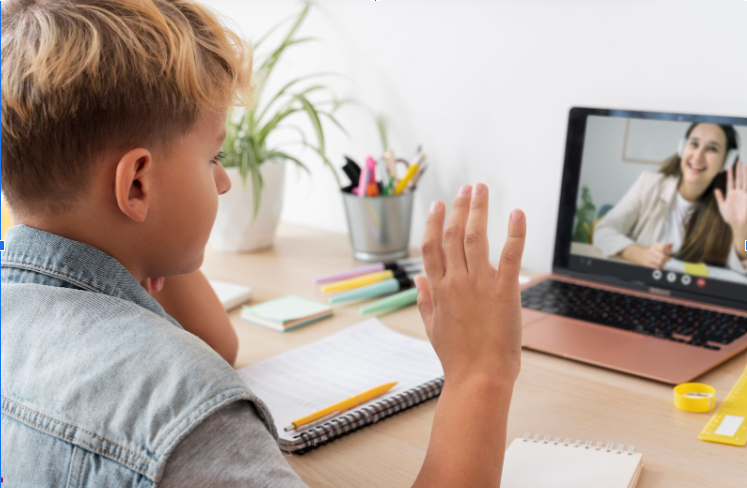
To support this learning, and if your child is struggling at school, don’t hesitate to call on our online school support professionals. Sometimes all it takes is a little nudge for things to click!