Did you know? Leonardo da Vinci deliberately wrote his texts from right to left to keep them hidden from prying eyes. Decoding them required the use of a mirror to read them. While not a recent phenomenon, mirror writing is nonetheless becoming more and more common among young children. An overview and its implications.
What is mirror writing?
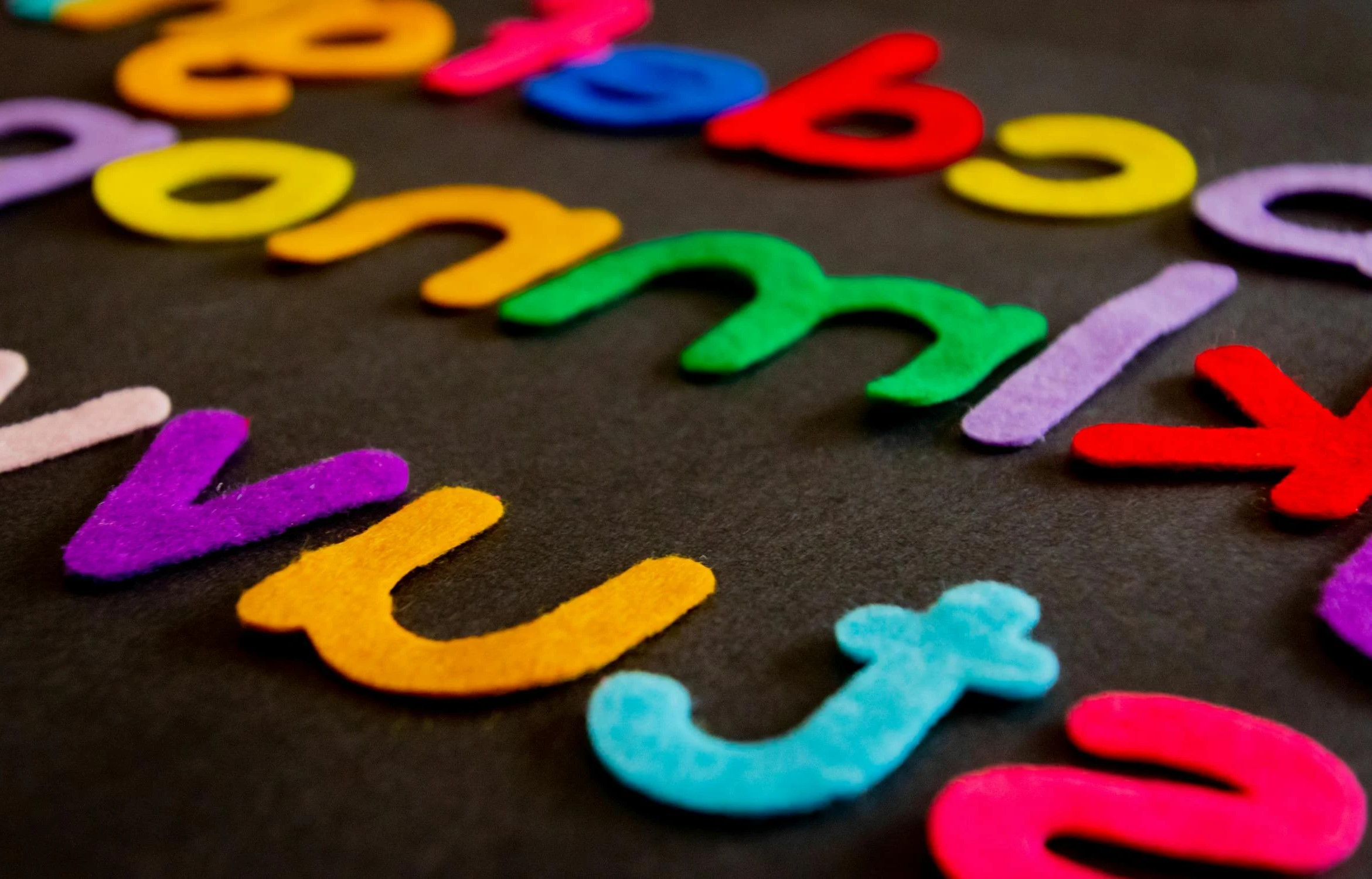
Also called “specular writing,” mirror writing is a universal phenomenon, observed across all cultures and all types of handwriting, even when learning Japanese or Chinese characters. For example, this lateral graphic reversal of letters makes the “E” look like a “3,” but the “J” and “Z” are also frequently reversed in French.
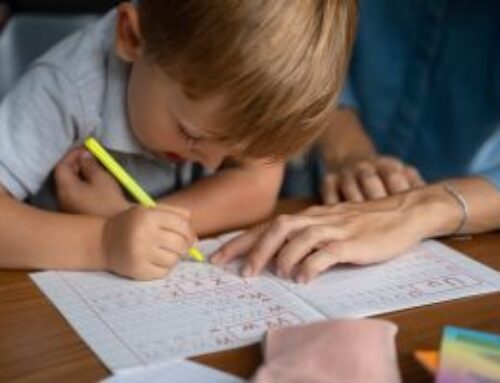
Appearing around the age of 4 to 5, mirror writing has been subject to many judgements and misconceptions due to its current resurgence, the best known being that it’s linked to heavy use of digital tablets… Yet this type of writing entered the scientific literature with the German neurologist Alfred Buchwald, back in 1878, nearly 150 years ago!
Where does mirror writing come from?
Its origins have been the subject of many theories, often incorrect, such as its supposed link to left-handedness. Today, this process is explained on two levels:
- The brain level
In 1925, Orton’s theory explained that one hemisphere of the brain (often the left) correctly represented letters while the other (the right) represented them in mirror form. But the approach put forward by Della Sala and Cubelli in 2007 overturned this idea by highlighting a directional apraxia: children have a motor programme for forming letters and numbers, but lack a sense of direction, left or right.
- The behavioural level
Mirror writing is explained by the direction children give to their writing. In our culture, they orient it to the right, which leads them to reverse capital letters and numbers oriented to the left, such as “J,” “Z,” “1,” “2,” “3,” “7” or “9.” When spatial constraints force them to write from right to left, the letters and numbers most affected will be “E” and “C,” since these characters are more oriented to the right…
How should you react to your child’s mirror writing?
While the phenomenon of mirror writing is becoming more and more common, this is easily explained, according to child psychiatrist Stéphane Clerget: “In the same way that we encourage children towards early development, independence and stimulation, we’re teaching children to write earlier and earlier, and as a result, more and more children are exposed to this kind of writing.”[1]
If you notice this in a child under 6, wait a few years to see whether this small quirk naturally fades away or becomes established. Around age 7-8, it may be worth consulting a speech and language therapist, who can, if needed, refer you to a handwriting therapist (graphotherapist) to correct this issue.
Note that mirror writing is not at all correlated with any learning disorder, whether dysgraphia, dysorthographia, or dyslexia.
[1] Source: https://www.tf1info.fr/education/psychologie-ecriture-en-miroir-speculaire-pourquoi-certains-enfants-inversent-ils-les-lettres-2132424.html