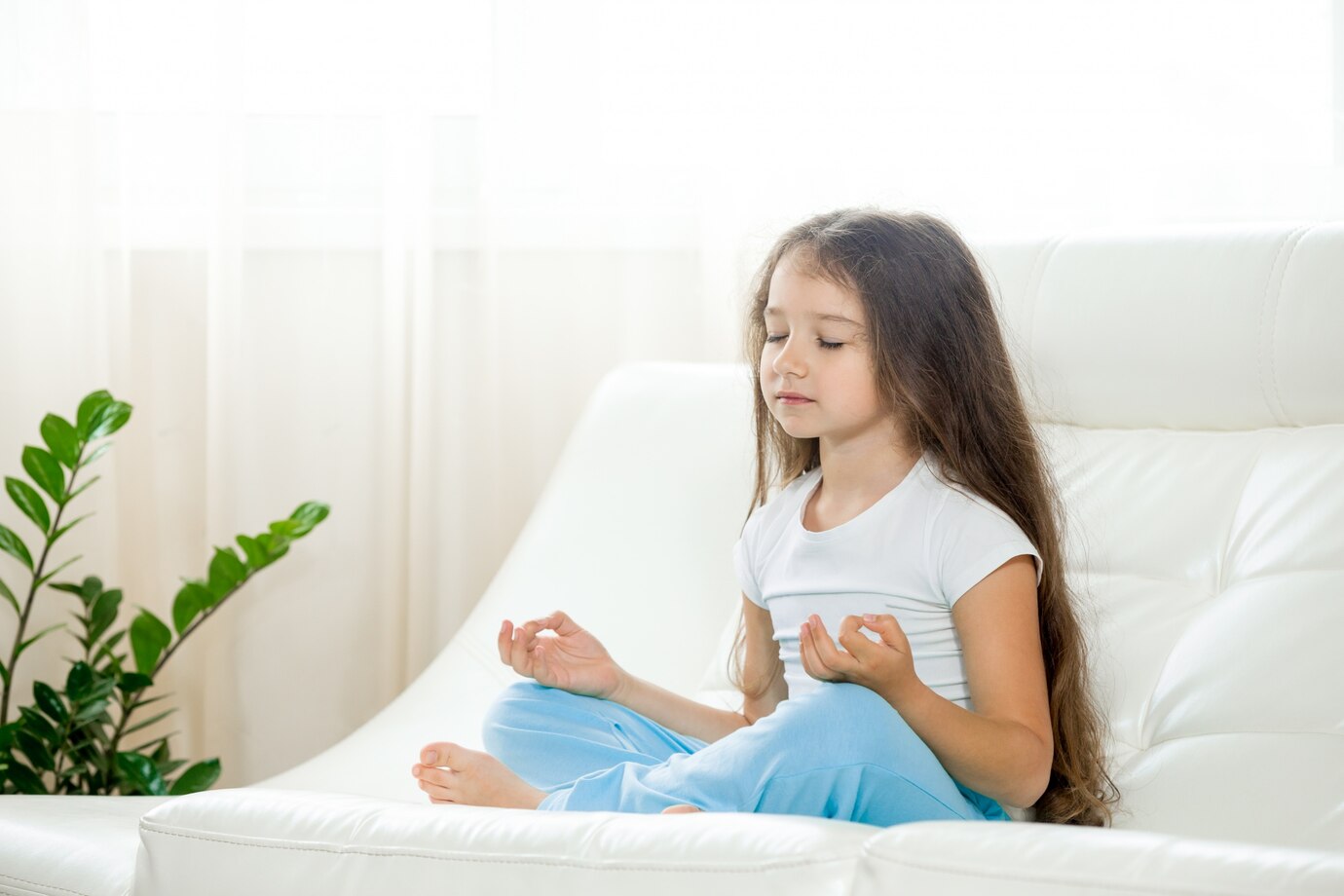
Sophrology is a training of body and mind, aimed at developing wellbeing and greater serenity. Widely used for children with ADHD, it can also soothe the inner turmoil of DYS or gifted children (sleep disorders, anxiety).
But today, many different practices have developed, which is why one session can be very different from another: as “sophrology” became a generic term, Professor Caycedo registered the term “Caycedian Sophrology®” in 1992 to distinguish his practice from others.
The origins of sophrology
Created in 1960 by neuropsychiatrist Alfonso Caycedo, the term “sophrology” originally referred to hypnosis techniques used by psychiatrists in hospital settings. They helped patients become aware of their states, so as to make them active participants in their own treatment.
It was not until 1967 that sophrology became a structured discipline, drawing lessons from other techniques such as the Coué method, Jacobson’s progressive relaxation, Schultz’s autogenic training, phenomenology, yoga and Zen.
Caycedo’s Dynamic Relaxation (CDR)
The Caycedo Method® is built essentially around Caycedo’s Dynamic Relaxation (CDR), the true backbone of its practice. It is made up of 12 degrees spread across 3 cycles:
- The Fundamental Cycle, aiming for better self-knowledge and the development of our bodily, mental, emotional, intuitive and creative awareness;
- The Radical Cycle, developing energetic and cellular awareness;
- The Existential Cycle, focusing on the discovery and mastery of existential awareness, projecting the patient into a free, responsible and dignified life.
Alongside this, the Caycedo Method® includes specific techniques for working with the parameters of the present, the past and/or the future, in order to meet therapeutic, educational, sporting or preventive needs. Lasting around ten minutes, these exercises are easy to incorporate into daily life.
Fields of application of Caycedian sophrology®
The Caycedo Method® activates the patient’s concentration, clarity and creativity, channelling negative emotions to awaken positive emotions.
In the medical and paramedical field, it proves useful for cases of anxiety (phobia, panic…), depression, psychosomatic conditions and sleep disorders. But beyond the psychological and psychiatric sphere, Caycedian sophrology® can also support nursing or dental care, speech therapy or physiotherapy.
In the educational field, this method can help children facing family, interpersonal or school-related difficulties who show physical symptoms (sleep disorders, somatisation, mood changes, attention and concentration problems…).
In sport, CDR uses futurisation and programming techniques, particularly effective for high-level athletes. More generally, Caycedian sophrology® can help with stress management and is suitable for everyone, men, women, teenagers, children, young people or seniors.
If you think this approach could help your DYS, ADHD or gifted child, do not hesitate to contact a Caycedian sophrologist on the Ora-Visio platform!