Dyscalculia affects the learning of numerical activities, and in particular the procedural and conceptual aspects of calculation and counting, as well as the memorisation of number facts. In more concrete terms, this results in difficulties counting, enumerating, doing mental arithmetic, solving problems, setting out a written calculation, and so on. Fortunately, fun games specifically designed for this group can support children with DYS disorders and help them overcome these difficulties – such as L’Attrape-Nombres (“Number Catcher”).
A game devised by the INSERM-CEA Cognitive Neuroimaging Unit
The Cognitive Neuroimaging Unit (UNICOG) brings together professionals from INSERM Université Paris Sud and the CEA (French Alternative Energies and Atomic Energy Commission). “Its mission is to study the brain basis of cognitive functions, in healthy individuals and in patients with neurological disease, by developing and using neuroimaging methods alongside experimental paradigms drawn from cognitive psychology.”[1]
Among its research themes are numerical calculation and the developing brain of babies and children. In this spirit, UNICOG developed the game L’Attrape-Nombres to strengthen the brain circuits involved in representing and manipulating numbers. A game specifically designed for children with dyscalculia, whether in nursery or primary school.
L’Attrape-Nombres, for dyscalculia
Aimed in particular at children aged 4 to 10, L’Attrape-Nombres pursues several goals:
- Gradually learning addition and subtraction
- Strengthening brain representations of number
- Better automatic processing of numbers
- Understanding two-digit numbers
- Helping children with dyscalculia
Through sustained practice, the game aims to stimulate the area of the brain that isn’t working well. Neuroscience research has already shown that maths games can improve number sense in children with dyscalculia.
A fun online game for nursery and primary school children
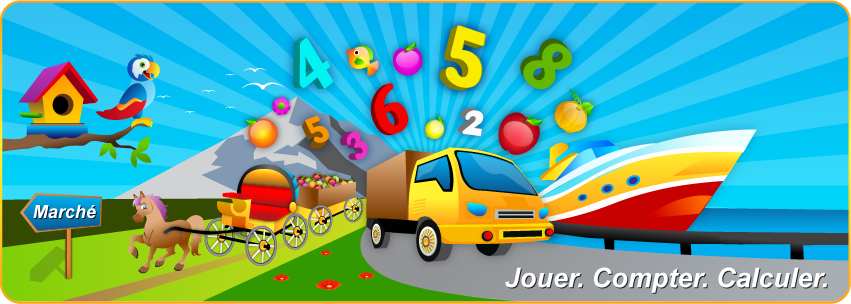
Available free online, L’Attrape-Nombres works a bit like Tetris, with crates of fruit, flowers and fish falling down the screen, which need to be loaded onto trucks, carts and boats.
The child with dyscalculia clicks on the crate and drags it onto the vehicle. Goods are loaded in batches of 10. If a vehicle can hold more, 10 must first be loaded onto the first row before filling the second…
As the game progresses through its levels, the possibilities multiply: a saw can cut crates in half to fit them into the vehicle’s free spaces, a bonus appears when the child lines up objects of the same colour in a row, drivers in a hurry require the loading to be finished before a bell rings, after which they’ll leave… and so on.
Very popular with nursery and primary school pupils, the best approach is perhaps to have your child try it and observe their reaction (and their progress). Don’t hesitate to also discuss it with one of our school support professionals to get their opinion!
[1] Quote: https://joliot.cea.fr/drf/joliot/Pages/Entites_de_recherche/neurospin/UNICOG.aspx